What is acid gas removal (SO2, HCl, HF)?
It is a flue-gas treatment process that neutralizes acid gases — SO2, HCl, and HF — with an alkaline sorbent (hydrated lime Ca(OH)2 or sodium bicarbonate), converting them into solid salts and bringing emissions below regulatory limits. The resulting solid reaction products are captured in a downstream bag filter.
What is the difference between dry, semi-dry, and wet systems?
Dry (DSI) injects a powdered sorbent into the gas duct, uses no water, and has the lowest capital cost; SO2 efficiency is typically 50-90%. Semi-dry (SDA) sprays a lime slurry, with 85-95% SO2 efficiency. Wet (Wet FGD) uses a slurry in a scrubbing tower, reaching 95-99%+ with recoverable gypsum but generating wastewater. The choice depends on acid load, target efficiency, and budget.
Which sorbent should be used — lime or sodium bicarbonate?
Hydrated lime Ca(OH)2 is typically economical for HCl/HF-driven emissions and low-to-moderate SO2. When high SO2 efficiency is needed (~90% on the dry route), sodium bicarbonate (NaHCO3) is preferred; it thermally decomposes into a high-surface-area reagent and works at lower stoichiometry. The final choice follows the gas analysis and reagent price.
What products form after the reaction?
With lime, SO2 → calcium sulfite (CaSO3·½H2O), which oxidizes to gypsum (CaSO4·2H2O); HCl → CaCl2, HF → CaF2. With sodium bicarbonate, SO2 → Na2SO4 and HCl → NaCl. These solids are captured as dust in the bag filter and removed from the system for disposal or recovery.
What should the stoichiometric ratio (NSR) be?
It varies by route: dry lime DSI is typically 2.0-3.0, activated sodium bicarbonate 1.1-1.5, semi-dry 1.3-1.6, and wet FGD around 1.0-1.05. Milling the sorbent to increase surface area achieves the same efficiency at a lower NSR, cutting reagent consumption.
At what temperature does the system operate?
Lime-based DSI typically runs at 140-180°C, activated sodium bicarbonate above about 140°C, and semi-dry SDA at 15-20°C above the water dew point (~140-160°C). The temperature window matters both for reaction kinetics and to avoid condensation/corrosion in the downstream bag filter.
Can acid gas removal be integrated with my existing bag filter?
Yes. Sorbent injection is typically added upstream of the existing bag filter, and the reaction products are captured on the filter media. The filtration area and pressure-drop margin should be re-evaluated for the additional sorbent load.
Are pollutants other than SO2 also removed?
Yes. HCl and HF are removed faster and at higher efficiency than SO2. By adding activated carbon on the same line, dioxins/furans, mercury, and other heavy metals can be co-controlled — a common approach especially in waste-incineration applications.
Is there an acid gas removal system manufacturer in Turkey?
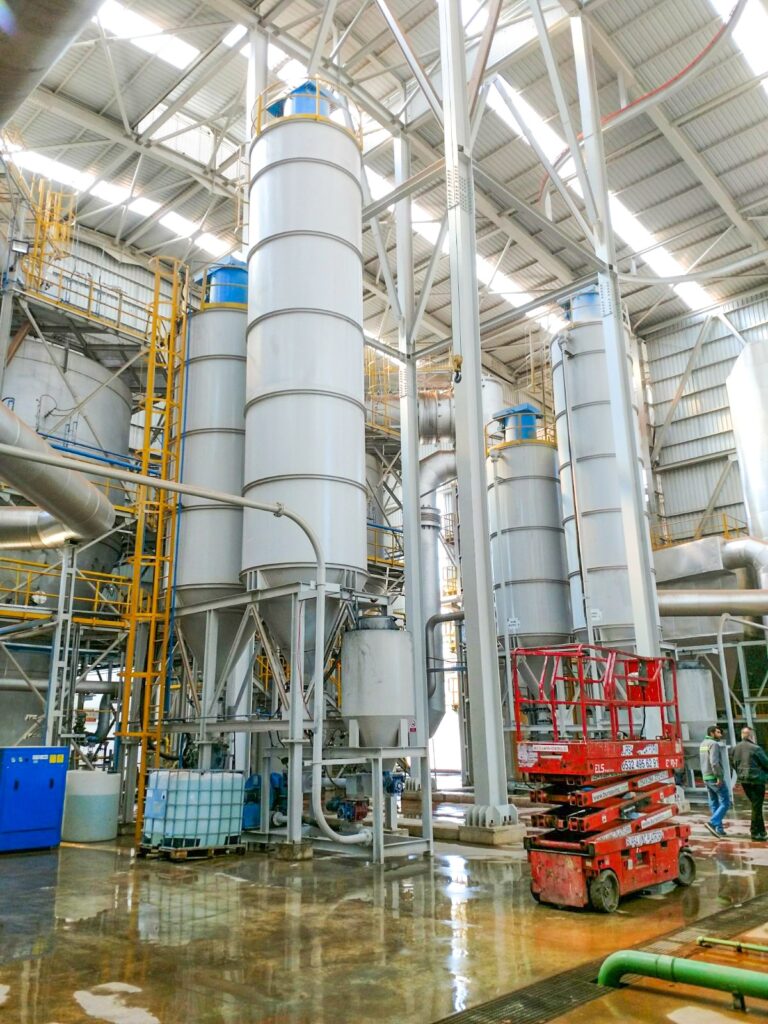
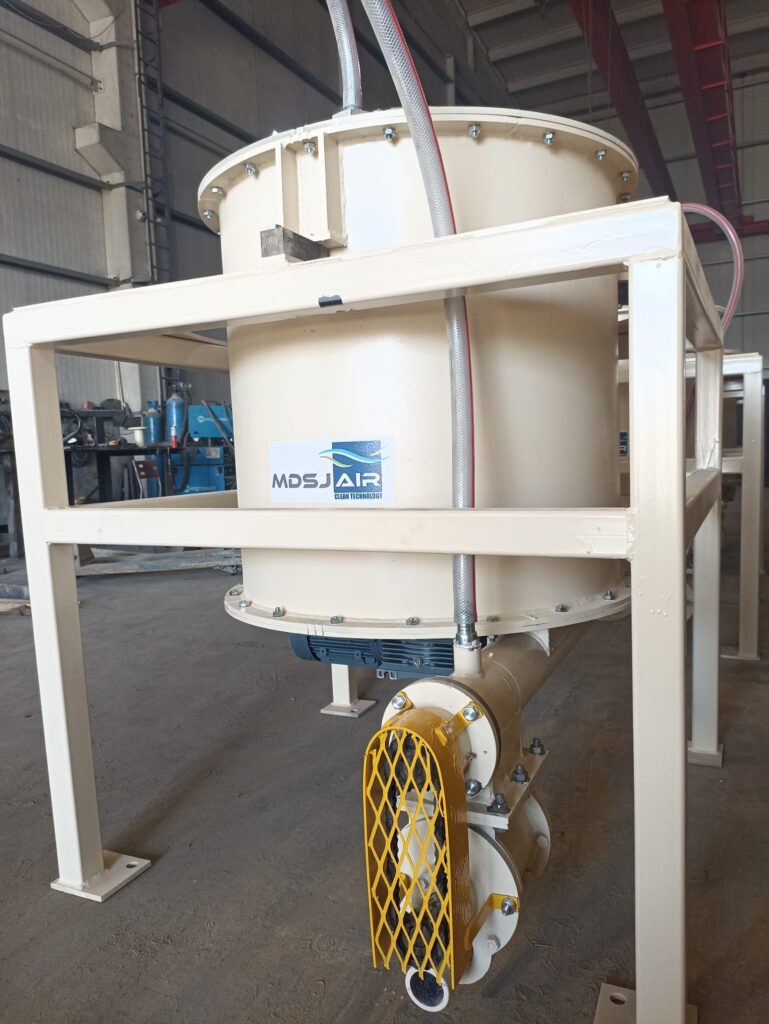
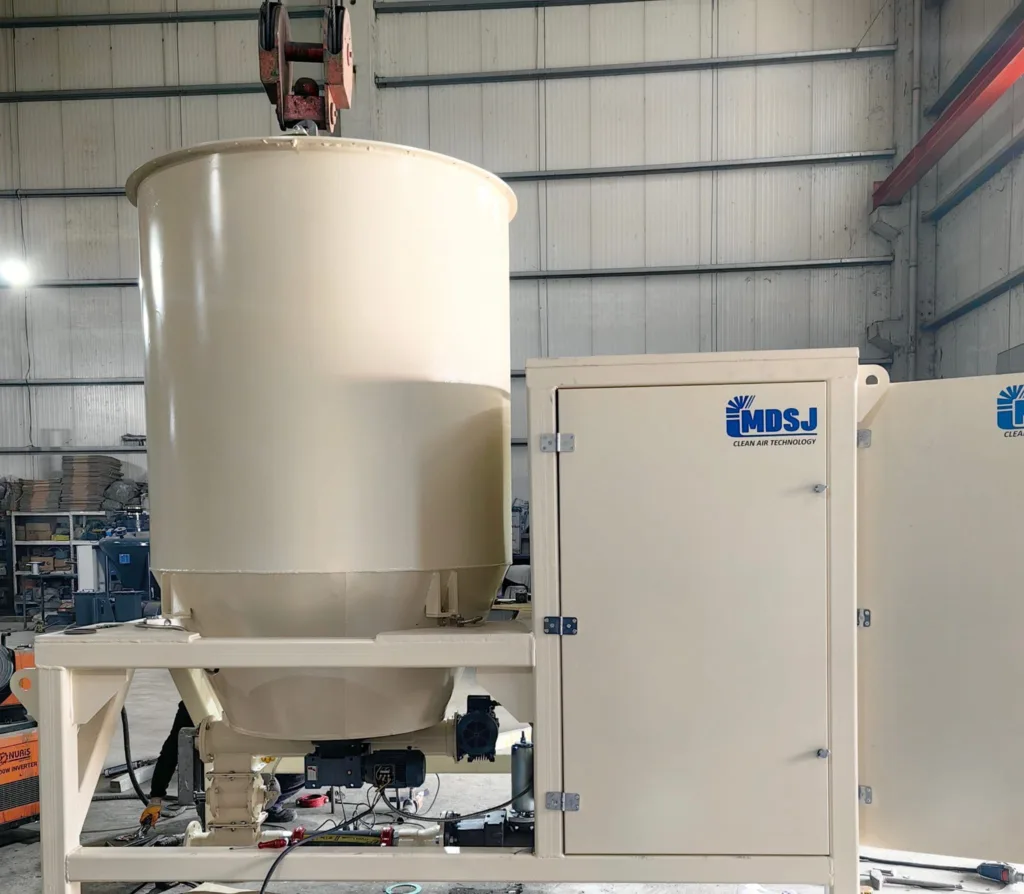
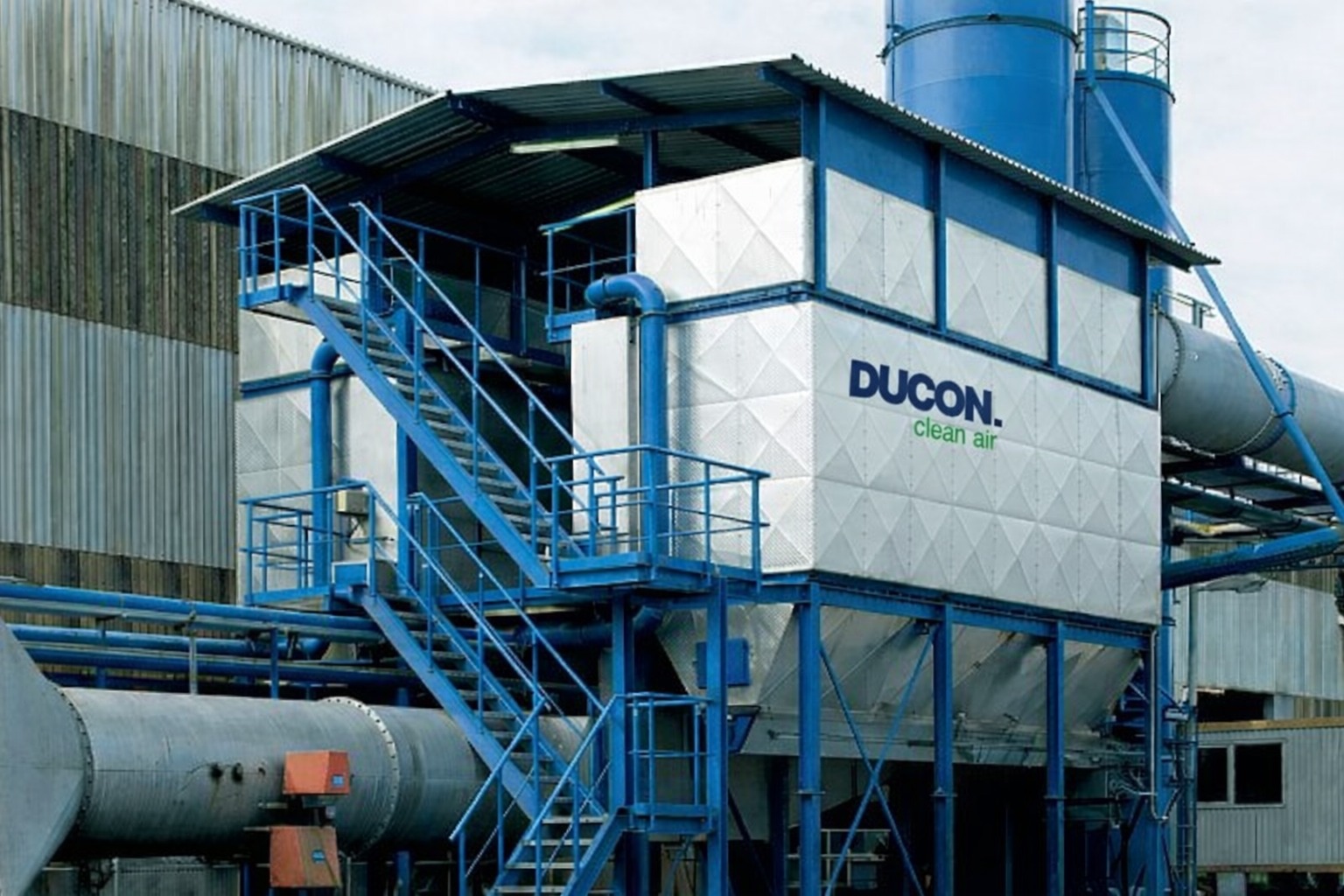
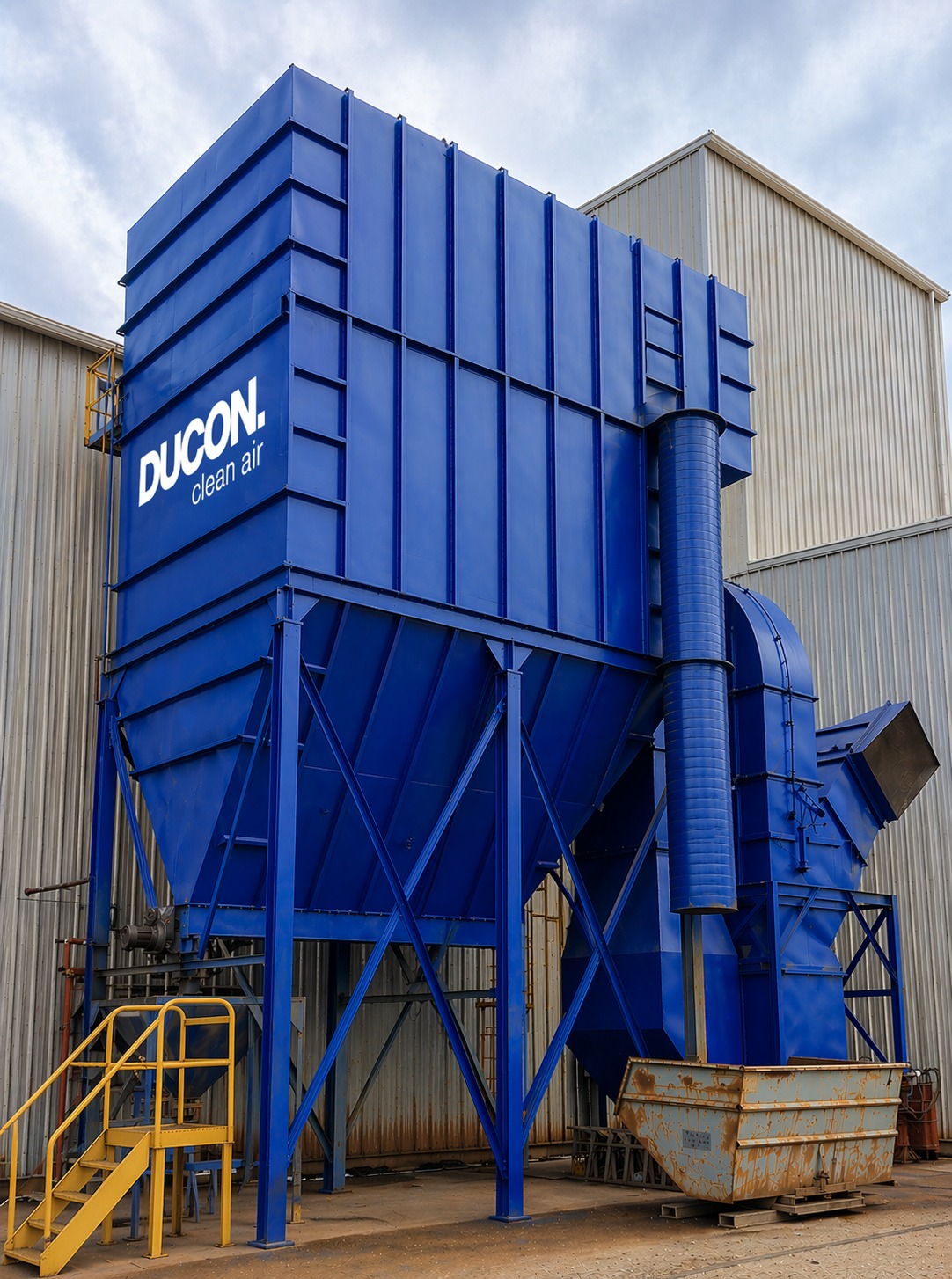
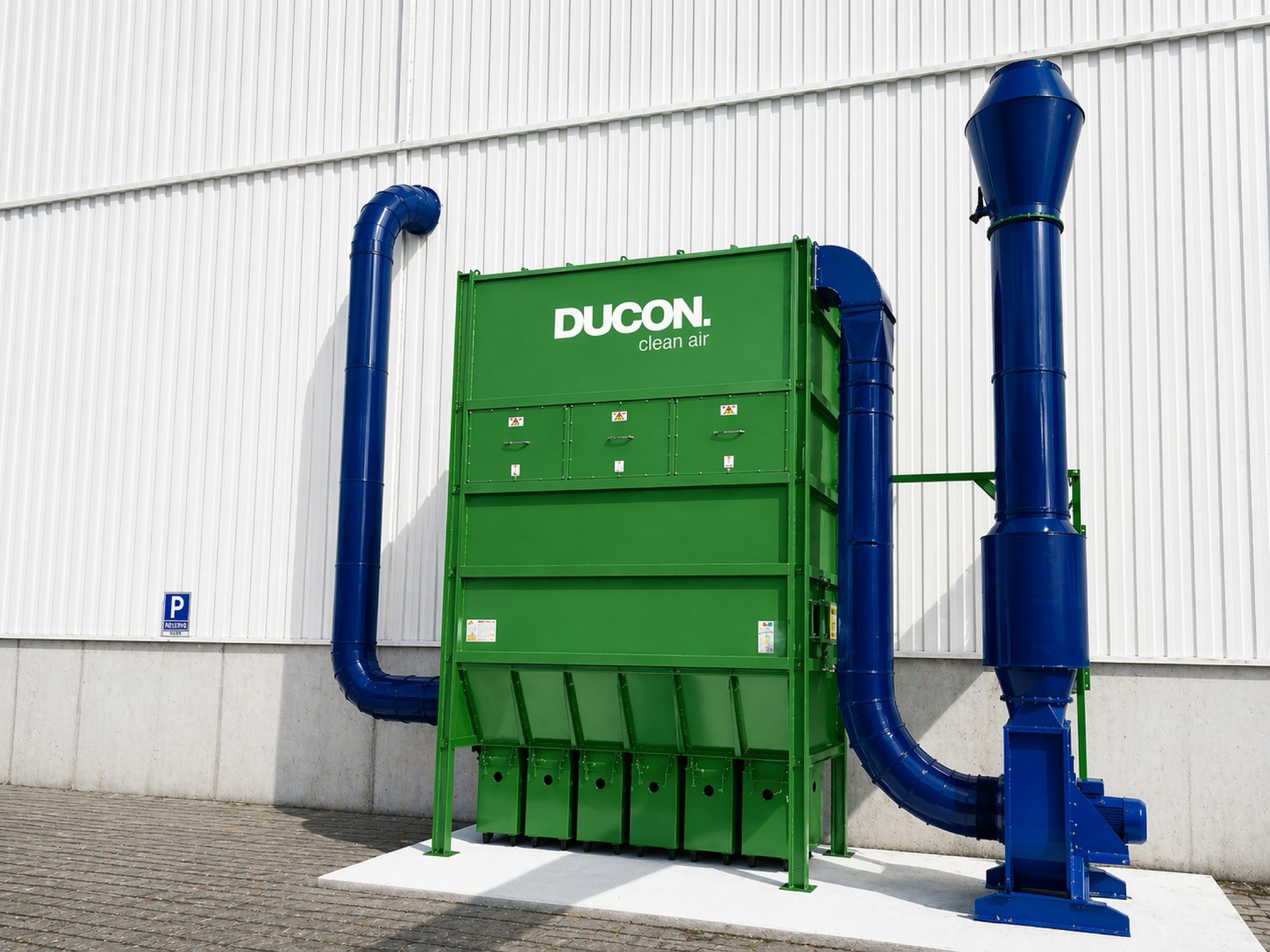
Yes, MDSJ Process designs, manufactures, installs, and commissions acid gas removal systems (DSI, semi-dry, and wet routes) in Turkey under the DUCON brand. Active since 1986, it delivers the silo, dosing, reaction duct, and bag-filter integration from a single source.
 Türkçe
 English
 العربية
 Deutsch