
Skip to content
DUCON Activated Carbon Filters

DUCON Activated Carbon Filters

DUCON activated carbon filters for VOC, odor and gaseous pollutant control: compact round design, easy maintenance and high performance with pre-filtration.

Contact Us

DUCON Activated Carbon Filters

Dry Collection

DUCON

Product Gallery

DUCON Activated Carbon Filters

1 images
DUCON Aktif Karbon Filtreler

DUCON Activated Carbon Filters

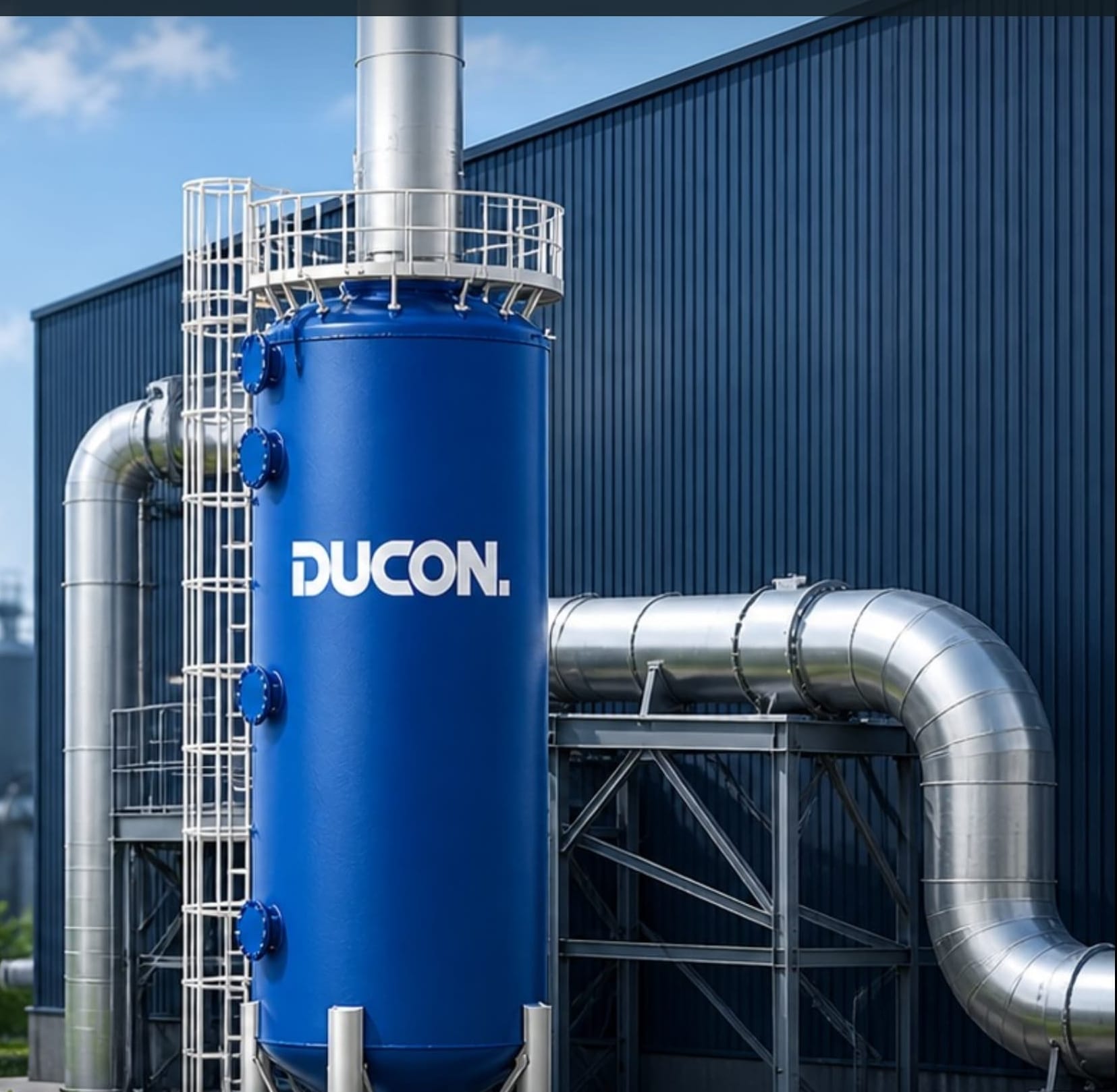
DUCON activated carbon filters use a dimensionally stable round design and can be safely integrated into dust extraction and ventilation systems. They remove harmful gaseous air pollutants effectively from industrial exhaust streams.

The activated carbon is selected and adapted according to the substances to be filtered. It adsorbs harmful gases, reduces odors, and cleans exhaust air. By using these filters, plants can minimize negative impacts on employees, the environment, and nearby residents.

Operating Principle

Raw gas enters the filter through the inlet manholes. The air to be cleaned is distributed evenly in the inlet chamber and then passes uniformly through the activated carbon bed. The carbon filling is held inside circular perforated sheet-metal cassettes.

As the gas passes through these cassettes, pollutants are adsorbed by the activated carbon; the cleaned gas is directed upward through the central tube. Activated carbon saturation progresses from the outside toward the inside over time. Once full saturation is reached, the carbon filling is replaced.

The clean gas is discharged through the stack installed at the top of the filter. To maintain optimum function and performance, pre-filtration is recommended before feeding raw gas into the activated carbon filter.

Technical Specifications

  • Nominal air flow: 1,500-90,000 m³/h per filter unit
  • Solids content: Solid matter in the gas stream should not exceed 5 mg/Nm³.

Equipment Features

  • Robust construction with separate filling and discharge manholes
  • Vertical ladder and access hatches suitable for easy maintenance operations
  • Membrane-type explosion relief panels mounted on the body for pressure relief
  • High-quality paint system for comprehensive corrosion protection
  • Full stainless-steel version available for aggressive exhaust gases
  • Impregnated activated carbon option for specific gas-filtration requirements

Advantages

  • Maximum dimensional stability: Vibration-free body structure independent of low or high pressure conditions
  • Safety: Pressure-resistant design can be implemented easily for explosion-risk applications
  • Compact design: Vertical installation requires a small footprint
  • Integrated stack: The filter body can also serve as the stack base, saving additional floor area
  • Easy maintenance: Fast filling and discharge with big-bag handling without dismantling
  • Flexibility: Easy integration into existing plants
  • Efficiency: Low pressure drop thanks to a large surface area and optimized bed thickness
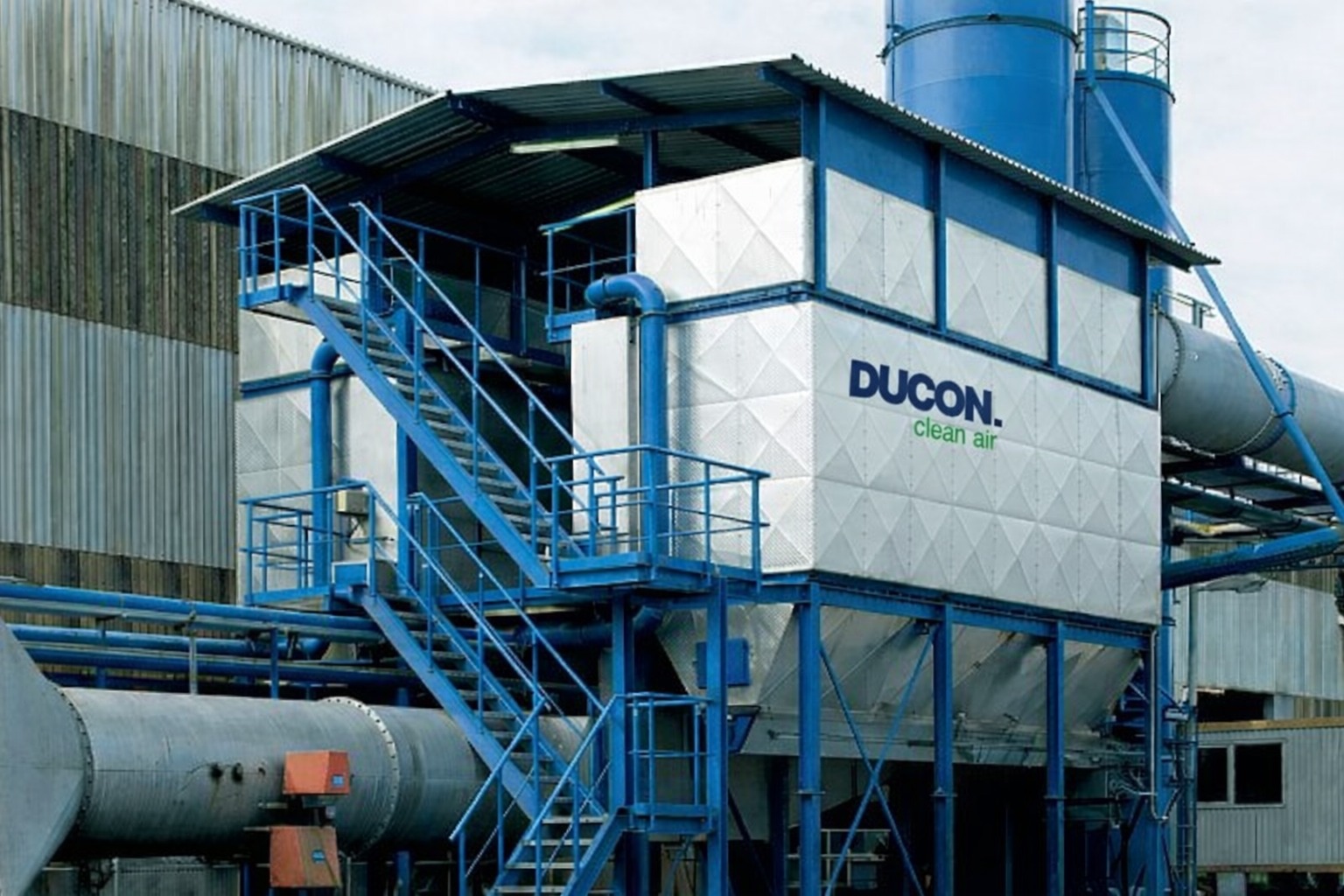
Operating principle

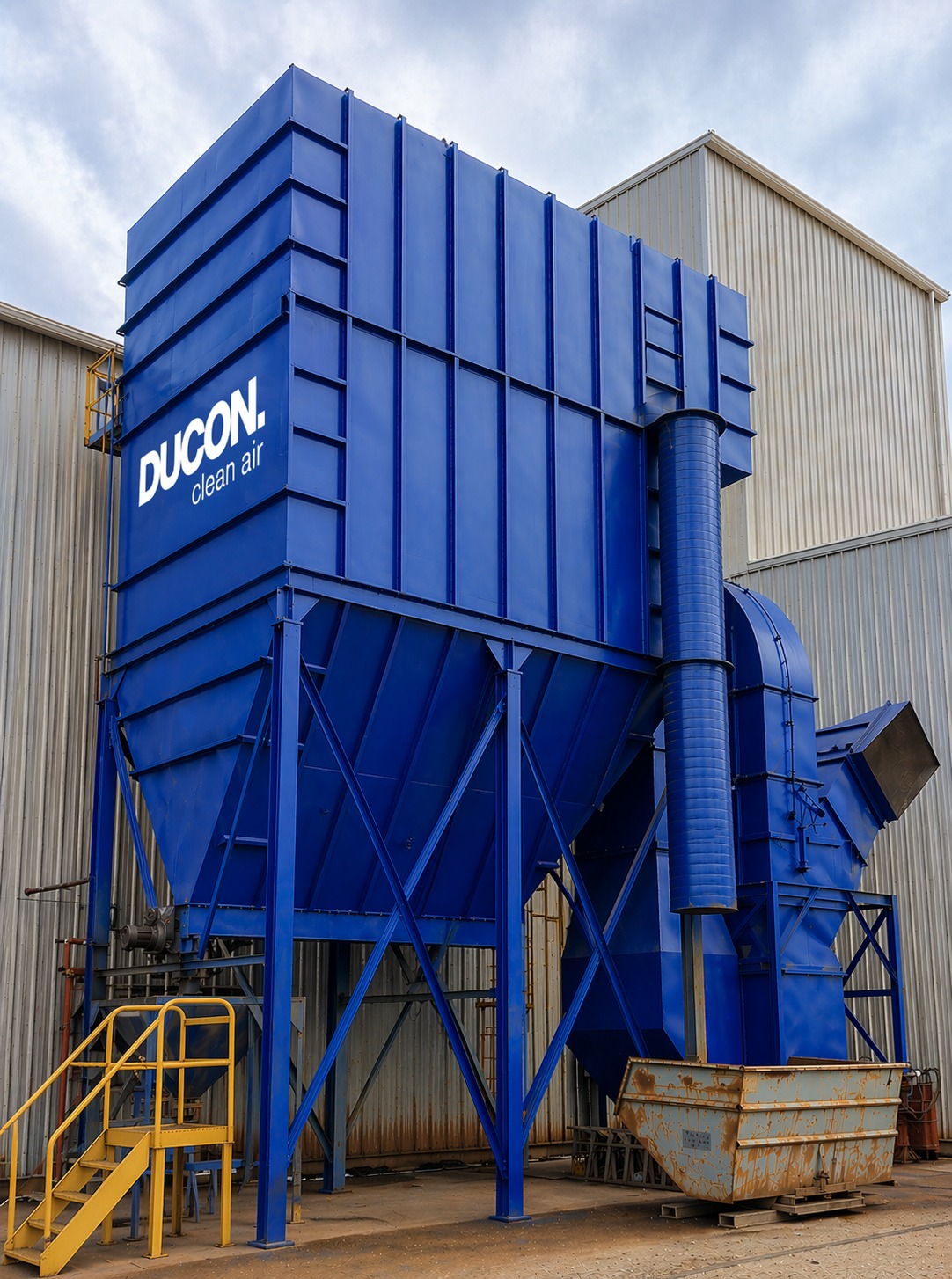
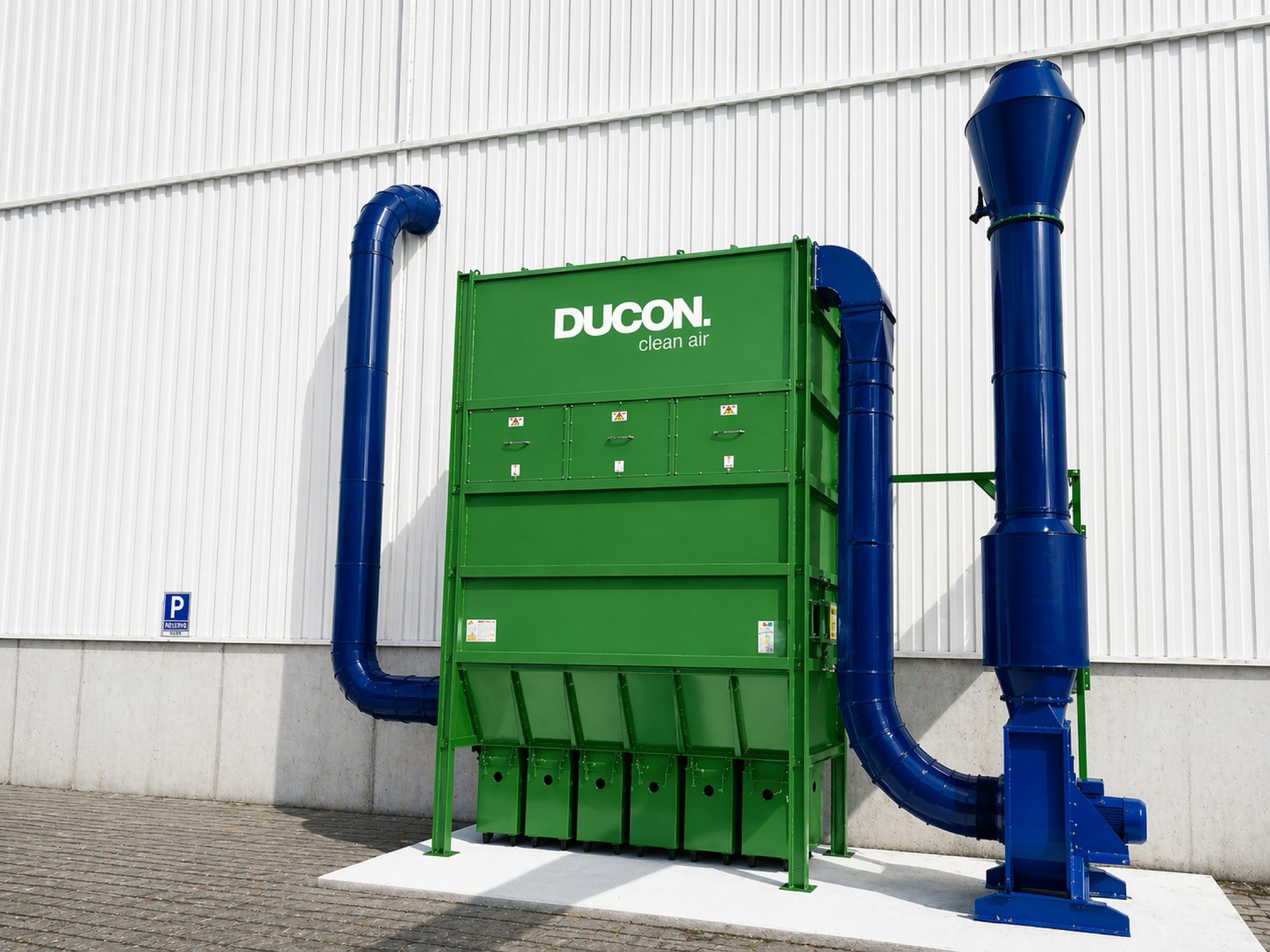
  • Dirty air enters the unit and passes through purpose-woven filter bags that capture the dust.
  • Particulates are held on the outside of the bags while clean air is sent to atmosphere or to a recovery line.
  • Once differential pressure reaches the set point, solenoid valves fire a brief burst of high-pressure air into each bag (the jet-pulse effect); the shock wave drops the dust cake into the hopper.

Advantages

  • High efficiency: up to 99.9% dust capture, including very fine particles.
  • Continuous operation: bag cleaning runs while production continues, minimizing downtime.
  • Low operating cost: long-life filter bags and optimized compressed-air consumption.
  • Modular design: expandable as capacity needs grow.
  • Compliance: meets emission limits with a safe margin.

Application areas

  • Cement and gypsum, iron-steel and metallurgy, food and feed plants.
  • Chemicals and paints, furniture and woodworking, pharmaceutical industry.
  • Mining crushing/screening, plastics and recycling lines.

Selection criteria

  • Air-to-cloth ratio, dust chemistry, operating temperature, and required airflow are evaluated together.
  • Bag media options: polyester, polypropylene, Nomex (for high temperature), and anti-static fabrics.
  • Pulse-valve count, hopper discharge layout, and maintenance access shape long-term field performance.

Frequently Asked Questions

Is a jet-pulse filter the same as a baghouse?

Baghouse is the broader family term; jet pulse is one of the most common automatic-cleaning architectures within that family.

Which bag media should I choose?

Polyester or polypropylene for standard temperatures, Nomex for high-temperature duty, and anti-static fabric for combustible-dust risks.

When does the system clean itself?

When differential pressure reaches the set point, solenoid valves automatically trigger pulse cleaning — without stopping production.

Quick Info

Filter bags are cleaned automatically with compressed-air pulses — production never stops
Captures up to 99.9% of dust, including the finest particles
Modular design grows with capacity needs

HTML Engineering Resources

Jump to the application page, reference project, and industry series without waiting for a PDF.

Need More Information?

Our expert team is ready to provide customized solutions.

Contact Us Request Quote

Embed This Product

Copy the code below and paste it into your website.

Want to learn more about this product?

Our expert team is ready to provide you with customized solutions.