Skip to content
Dense Phase Pneumatic Conveying

Dense Phase Pneumatic Conveying

Dense Phase Pneumatic Conveying moves material in a closed line at lower velocity and higher pressure to reduce wear and product degradation.

Contact Us

Dense Phase Pneumatic Conveying

Pneumatic Conveying

DUCON

Product Gallery

Dense Phase Pneumatic Conveying

4 images
Dense Phase Pneumatic Conveying

Dense Phase Conveying

Dense phase is characterized by high positive pressure conveying at low velocity. The most common positive pressure dense phase pneumatic conveying regimes are:Continuous Dense Phase High Pressure – Low Velocity Material is conveyed below the saltation velocity in a moving bed flow pattern (rolling or plowing). Velocities are 3 10/sec at the feed end, and 15 18 m/sec at the terminal end.Continuous dense phase is used to handling powders that may be easily fluidized and are able to retain air.Bed Flow Dense Phase Pneumatic Conveying Regime Discontinuous Dense Phase High Pressure – Low Velocity Material is conveyed below the saltation velocity in a slug-type flow pattern, i.e., a slug or series of slugs separated by air gaps are conveyed along the pipe. The slugs completely fill the full cross-section of the pipe. Velocities at the feed end are typically 1 -5 m /sec and 7 10 ft/sec at the discharge end.


DUCON DENSE PHASE PNEUMATIC CONVEYING

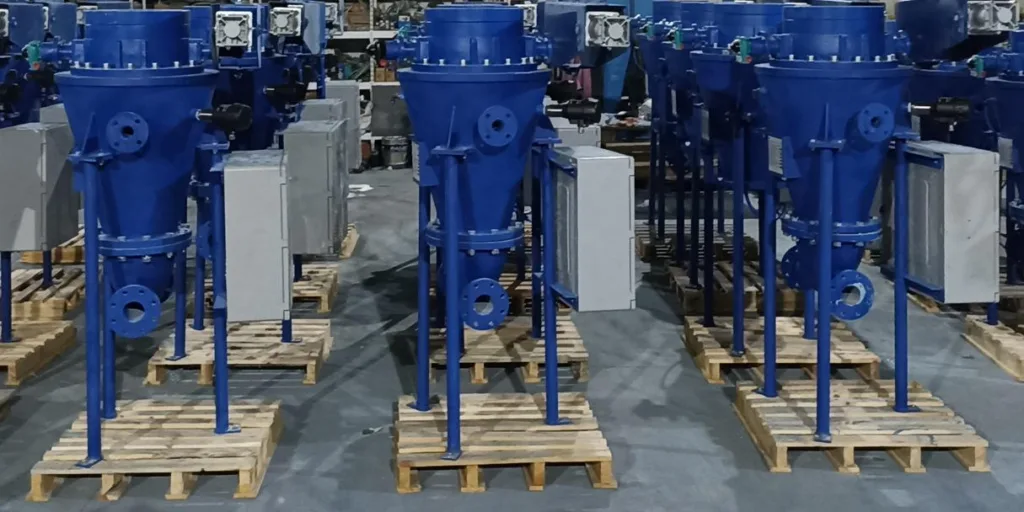
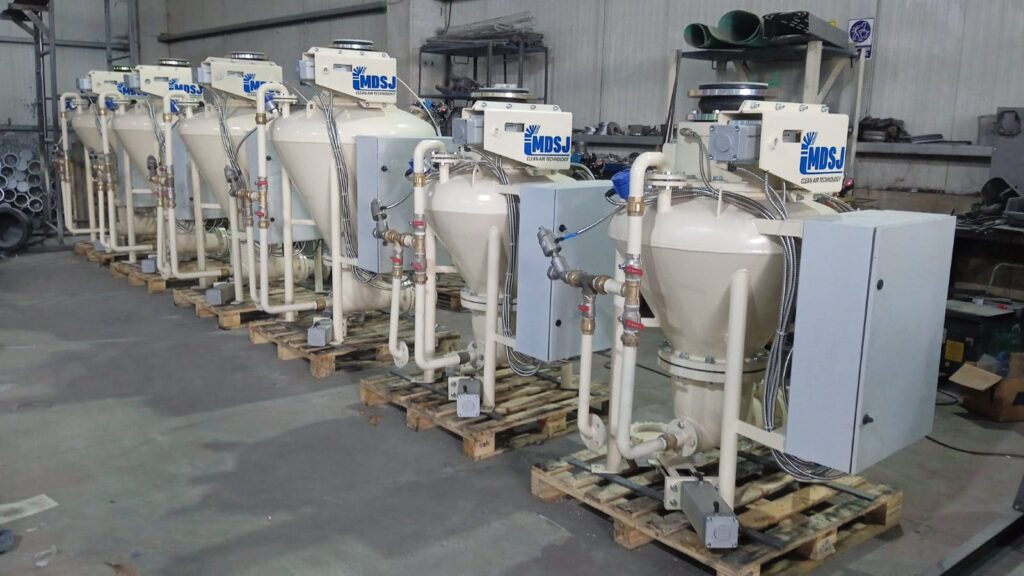
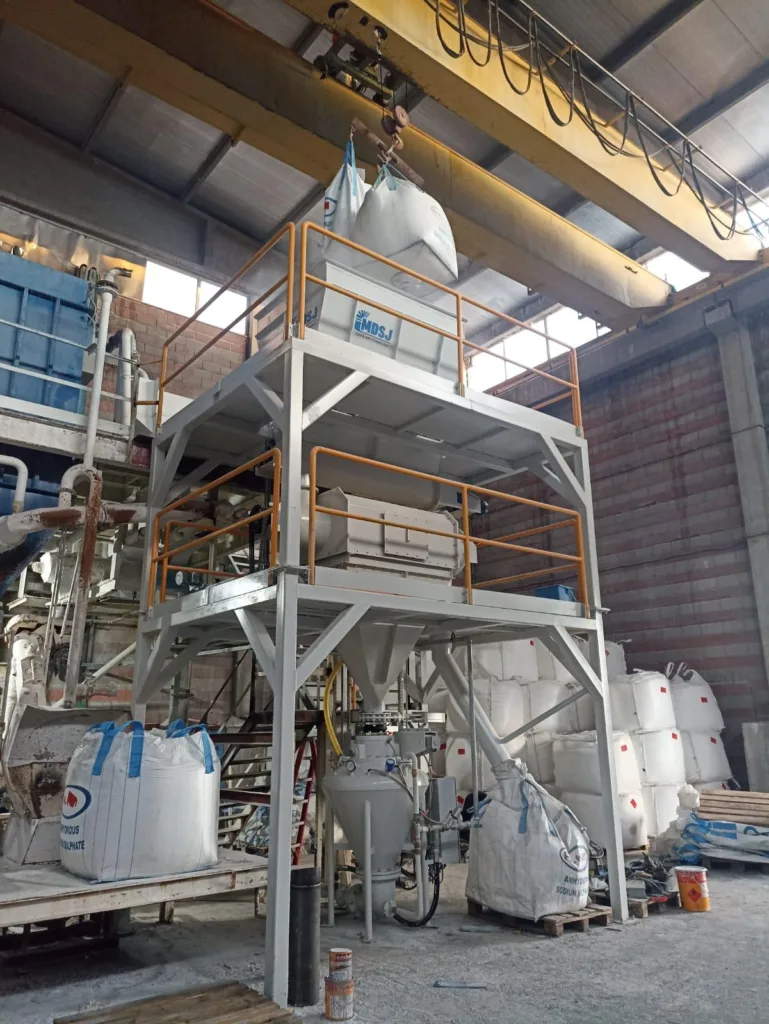
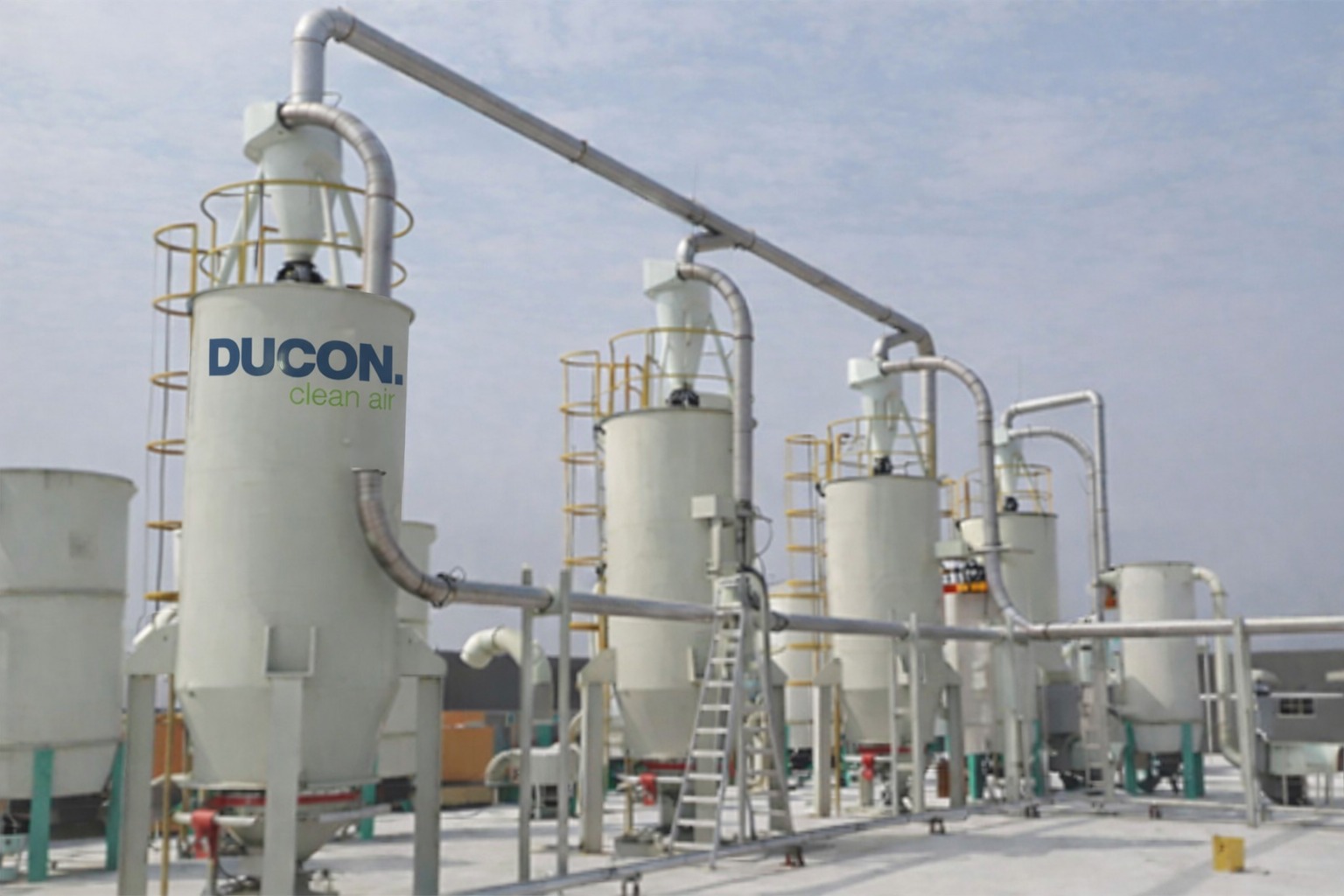
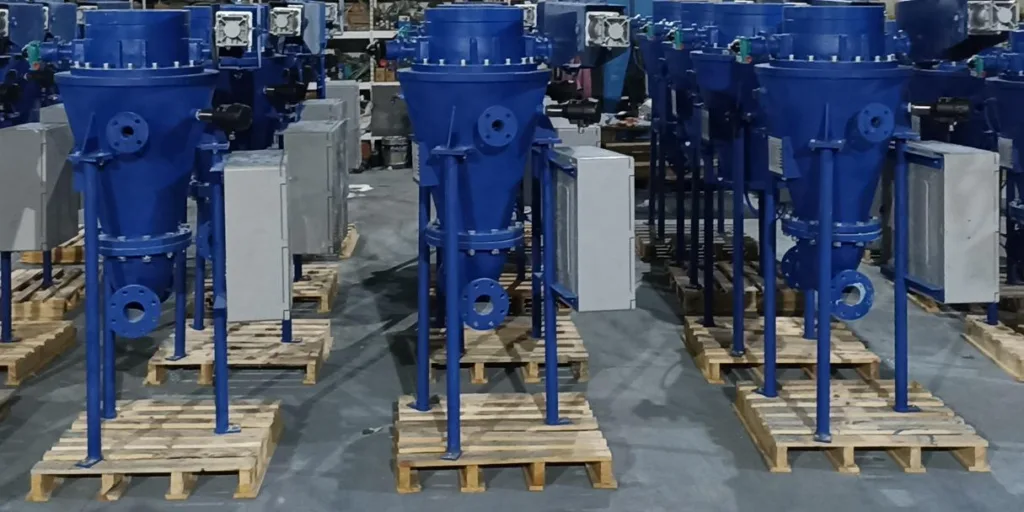
DUCON Dense phase pneumatic conveying is a method for moving difficult, abrasive, mixed batch, or friable materials at a low product velocity. The materials are conveyed within the pipe in slug form using small amounts of gas at a low velocity and high pressure. This type of system is favored for its low operating costs, basic maintenance, and minimal material degregation and system wear. This method is typically selected for moving material from a single collection point to either single or multiple destination points. Common materials suitable for dense phase conveying include sand, cement, mixed batch, chemicals, limestone, pet food, and others.

Provided the material is suitable for a discontinuous flow regime, this is the best regime for most applications in which power economy, pipe erosion, and material degradation issues are important. Slug Flow Dense Phase Pneumatic Conveying Regime Solid Flow Dense Phase High Pressure – Low Velocity System Material is conveyed well below the saltation velocity with the pipe almost completely full of material. The material is virtually extruded through the pipeline. The conveying velocity is 1-3sec throughout the system. There is virtually no agitation or turbulence within the pipeline with this flow regime.


REDUCE SYSTEM WEAR AND PRODUCT DEGRADATION WHILE IMPROVING MATERIAL TRANSFER EFFICIENCY

KEY BENEFITS

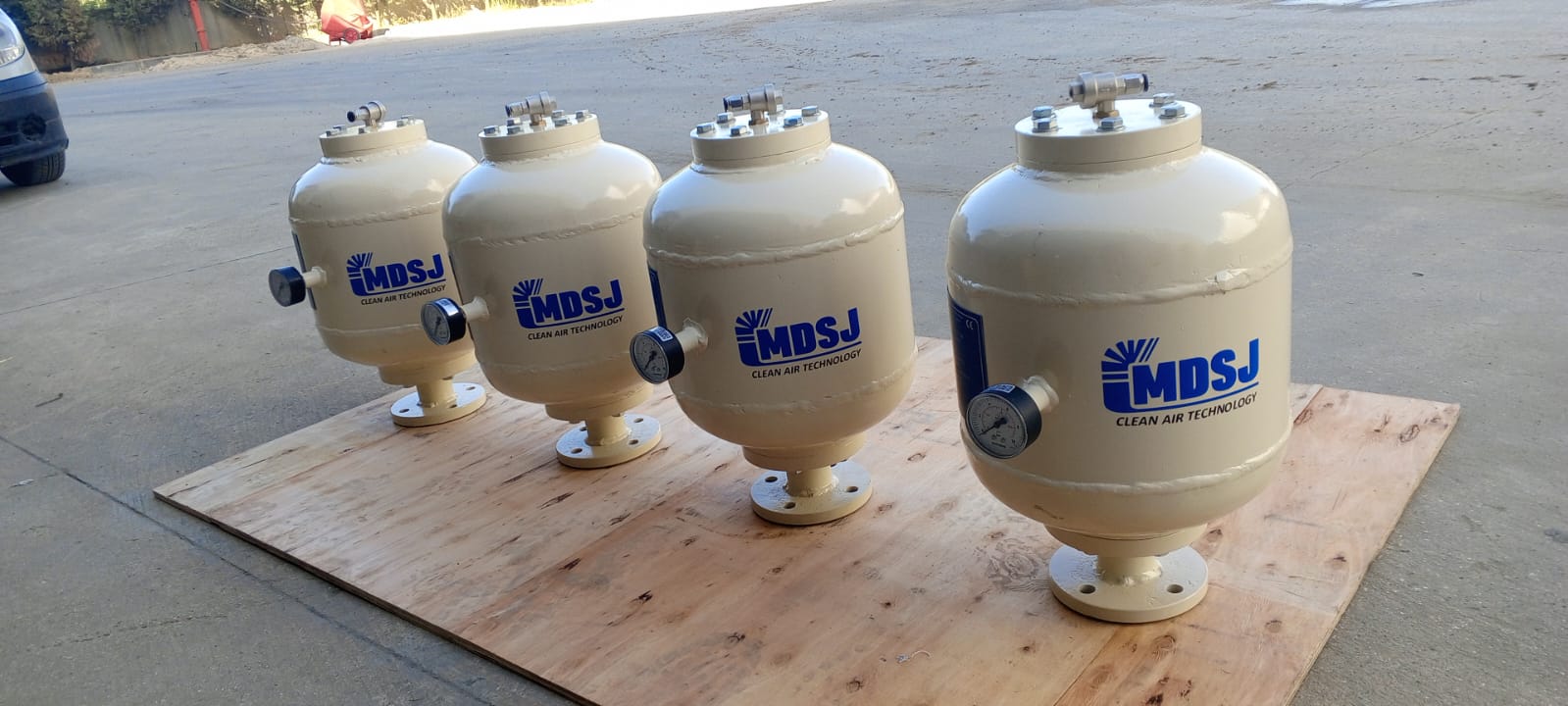
  • Our dense phase system offers Air BOOSTER , purge and non-purge concepts and continuous transport options. AIR BOOSTER strategically placed along the convey line to inject air, decreasing the required motive gas pressure and flow. This increases system reliability and reduces operational costs. • Non-purge concept - material can be intentionally left in the convey line, further minimizing ill effects from high velocity purges. This helps prevent material attrition and component wear, costly maintenance, and plant downtime. Continuous transporting - allows for continuous conveying of materials without a stoppage for de-pressurizing and refilling of the vessel.

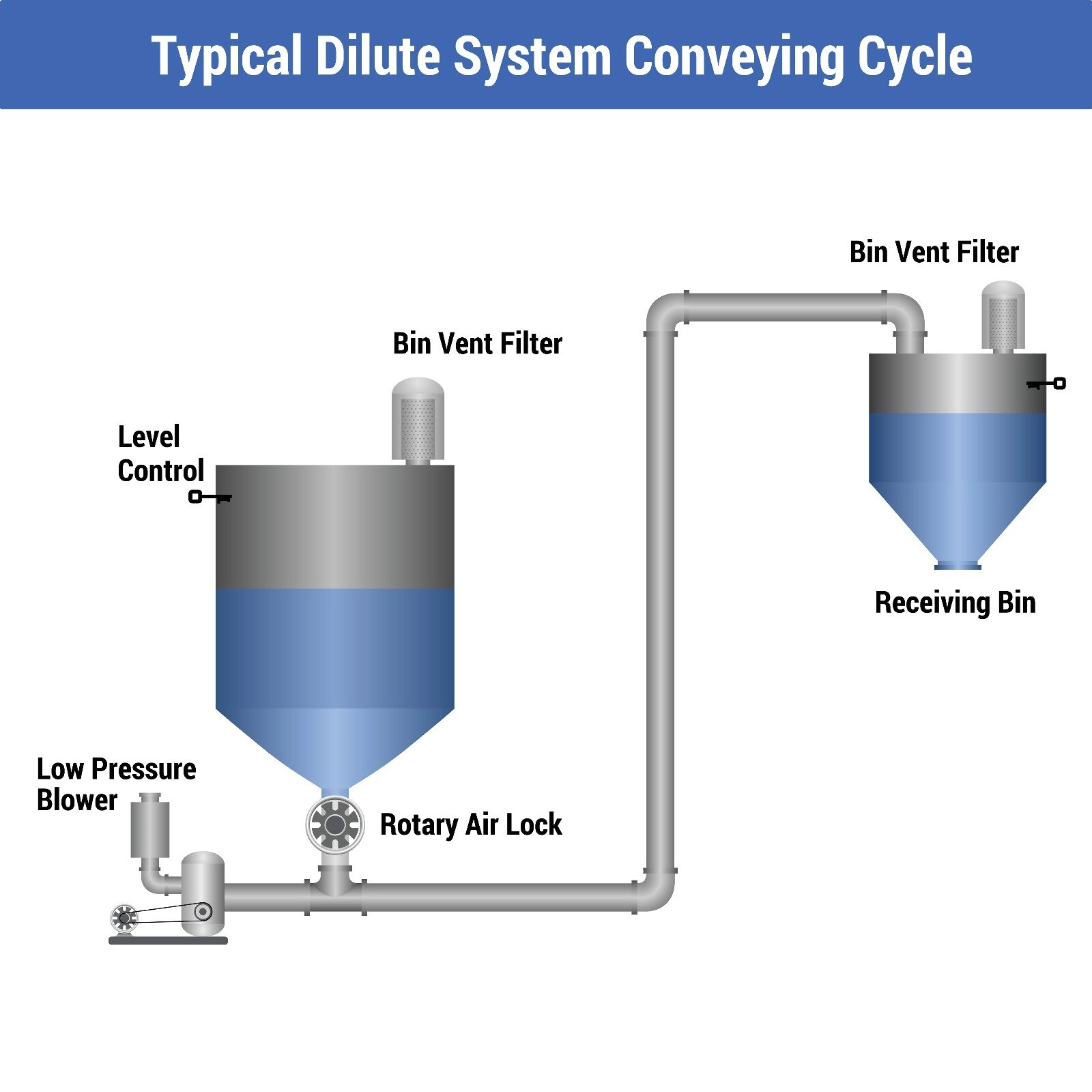
Solid dense phase is best suited for fragile materials with an attractive operating economy and very low pipe erosion.Solid Flow Dense Phase Pneumatic Conveying Regime Below table provides a comparison of the four regimes. Flow Regime Average Velocity M/Second Air-to-Material Ratio Air Material Dilute Phase 28-35 20-33 Over 100:1 Continuous Dense Phase 7.5 to 22.5 5 to 15 20 to 100:1 Discontinuous Dense Phase 2.5 to 12.5 1.0 to 7.5 Below 30:1 Solid Flow Dense Phase 2.0 to 5.0 0.5 to 2.5 Below 20:1 In the above table, air to material ratio measures system efficiency. It is the ratio of weight (lbs/kg) of material conveyed per weight (lbs/kg) of conveying gas used.Due to low conveying velocity, dense phase systems are often chosen for applications where the product is friable, abrasive or smears such as sand, glass, and coke.Most applications will benefit from low velocity, if not due to reduced wear, then due to reduced air consumption. As a general rule, the best economies are achieved by using the lowest possible conveying velocity.

Where does it fit best?

  • Pneumatic conveying is a strong option for cement, fly ash, mineral powders, and fragile bulk-solids transfer where closed handling matters.
  • On long routes, multi-turn lines, and silo transfers, it can offer a more compact solution than mechanical conveyors.
  • Where dust control and housekeeping matter, it supports a cleaner process environment.

Selection criteria

  • Particle size, bulk density, abrasiveness, and fragility are core design inputs.
  • Line length, bend count, air velocity, and pressure regime must be assessed together.
  • The choice between dense and dilute phase should balance energy, wear, and product integrity.

Operation and maintenance notes

  • Feed stability, airlock selection, and line build-up behavior should be monitored routinely.
  • Bend wear, plugging tendency, and blower/compressor loading are the main maintenance themes in the field.
  • If velocity is too high, wear rises; if too low, build-up and plugging become more likely.

Frequently Asked Questions

How do you choose between dense and dilute phase?

The decision depends on material sensitivity, line length, wear expectations, and the required transfer regime.

Is pneumatic conveying suitable for every material?

No. Material flow behavior, fragility, and tendency to build up all affect whether pneumatic transport is the right fit.

Which components deserve the closest maintenance attention?

Feed equipment, bends, airlocks, and the blower/compressor package usually need the closest monitoring.

Quick Info

Closed-line design helps reduce dust leakage and product loss
Material behavior and line geometry sit at the center of the design
Dense-phase and dilute-phase layouts answer different process priorities

HTML Engineering Resources

Jump to the application page, reference project, and industry series without waiting for a PDF.

Need More Information?

Our expert team is ready to provide customized solutions.

Contact Us Request Quote

Embed This Product

Copy the code below and paste it into your website.

Want to learn more about this product?

Our expert team is ready to provide you with customized solutions.