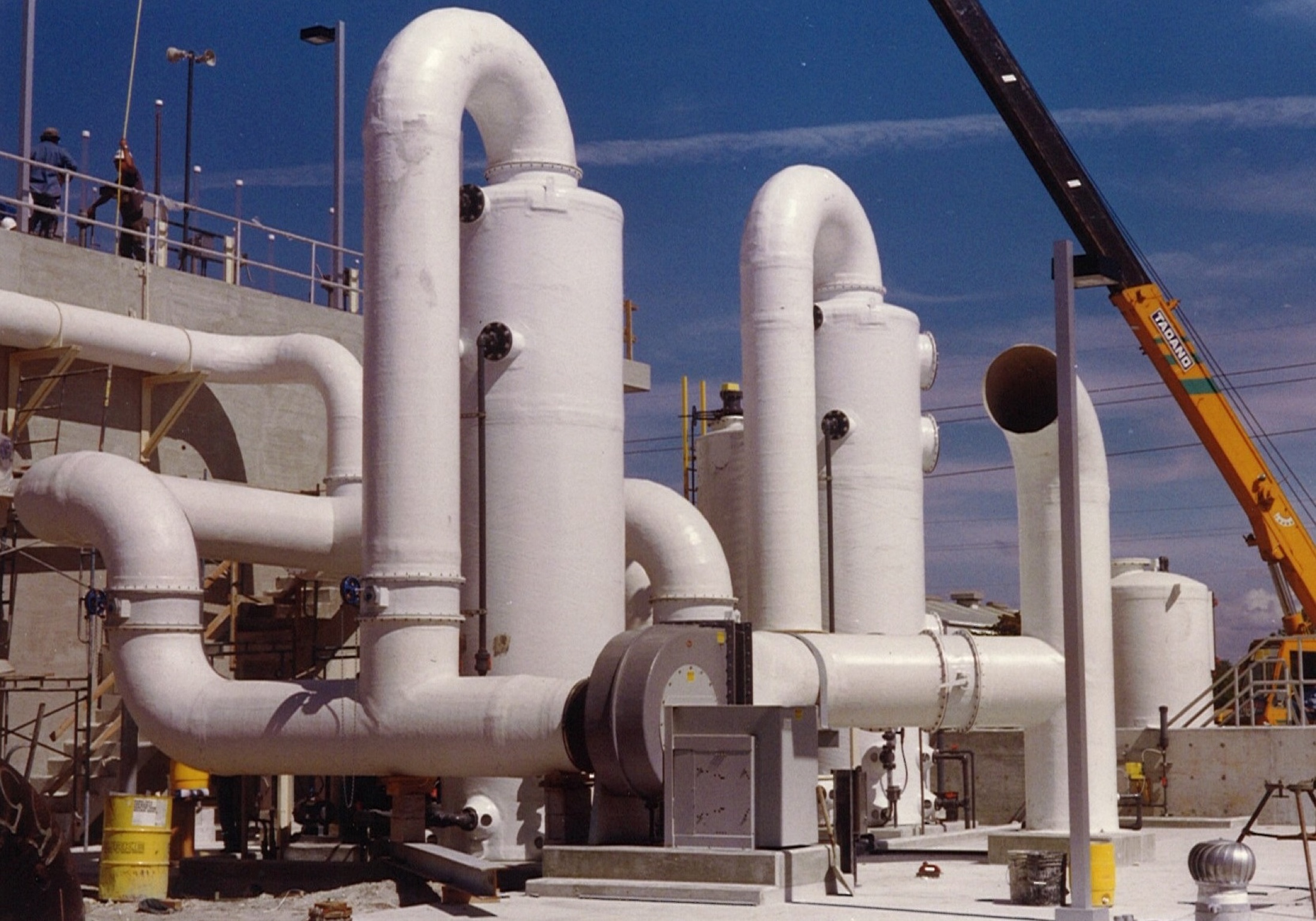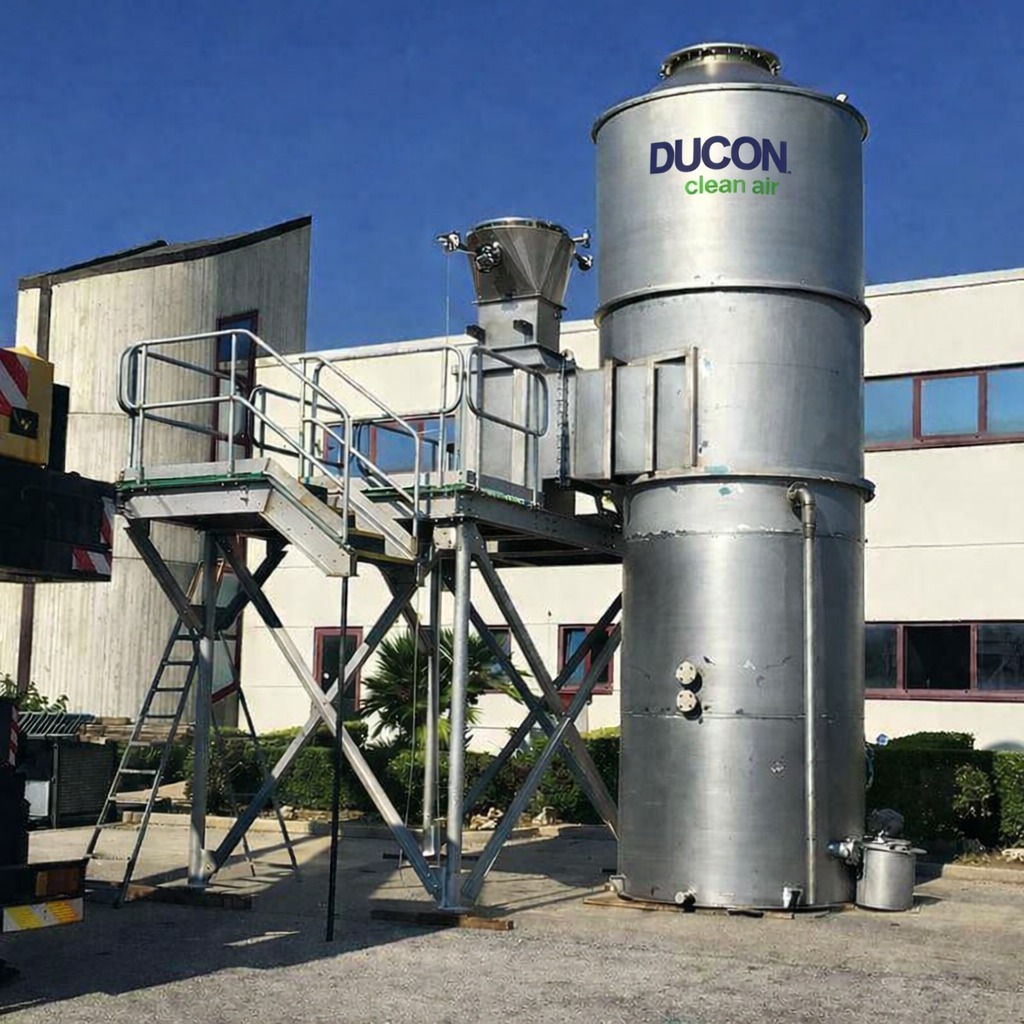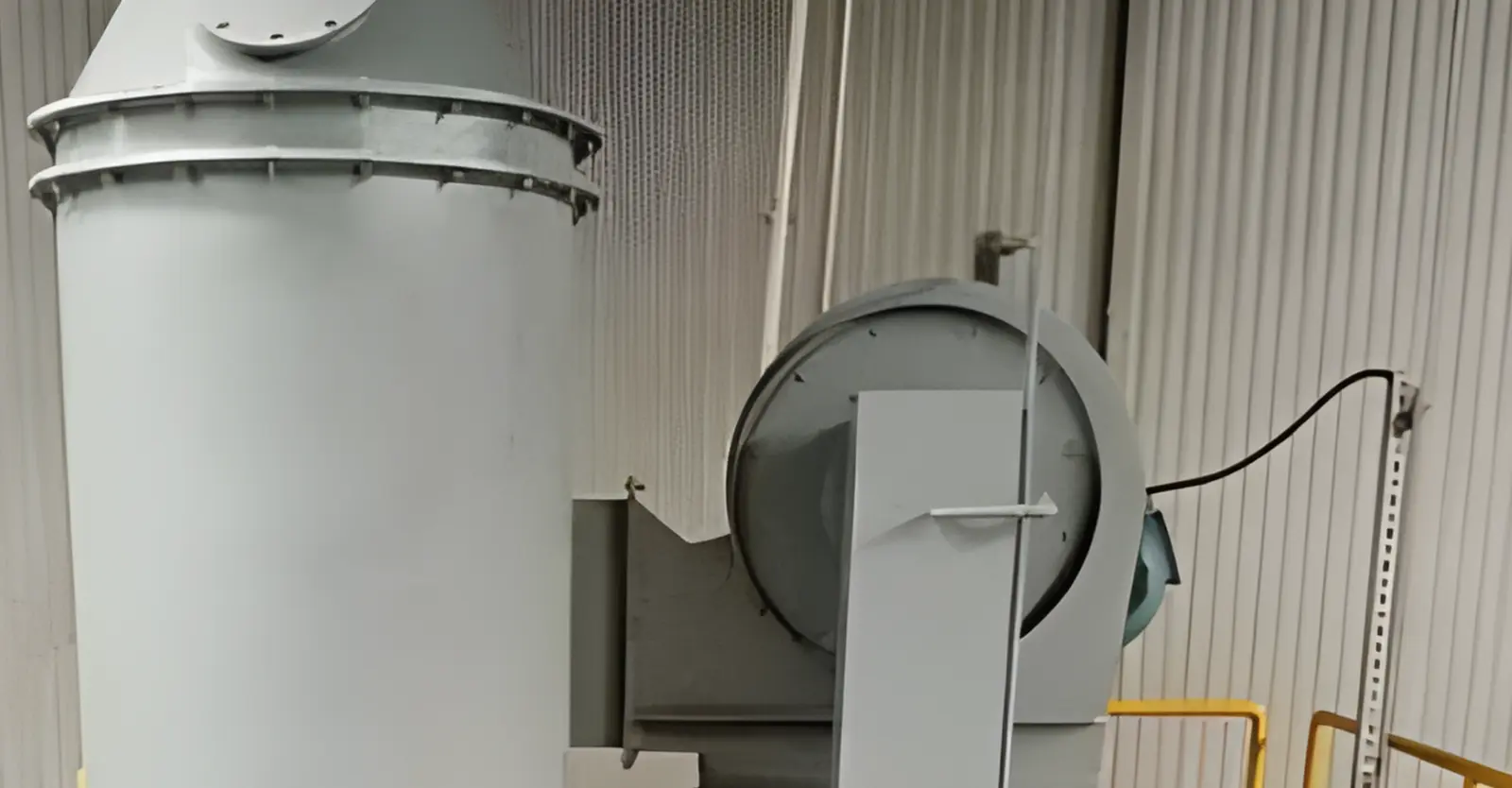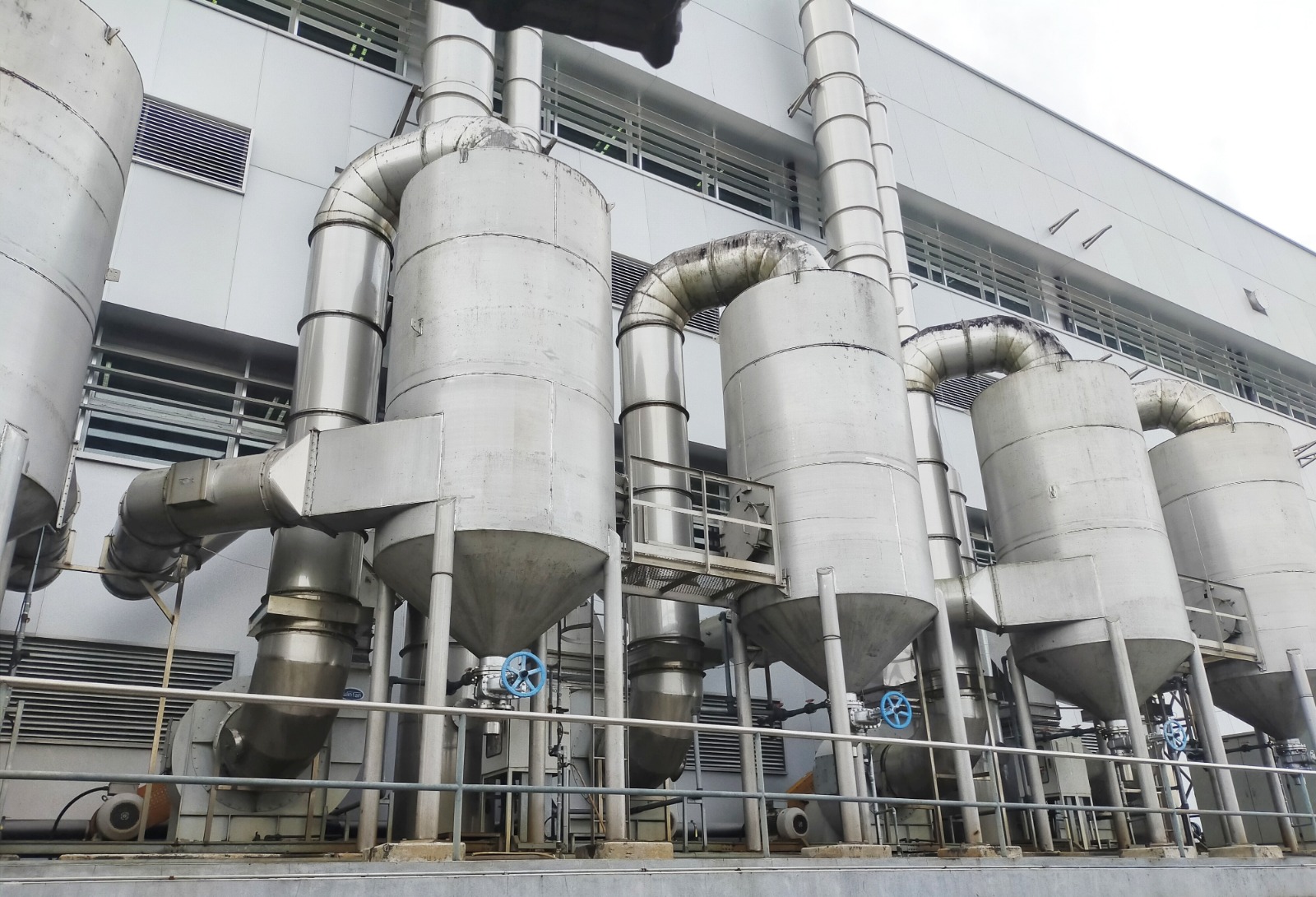

Easy Maintenance
Emission-control systems that clean exhaust from RAM machine stacks will foul over time and therefore require maintenance.
Thanks to DUCON’s careful design, the required maintenance is significantly reduced. When maintenance is needed,
accessibility is a key design attribute.
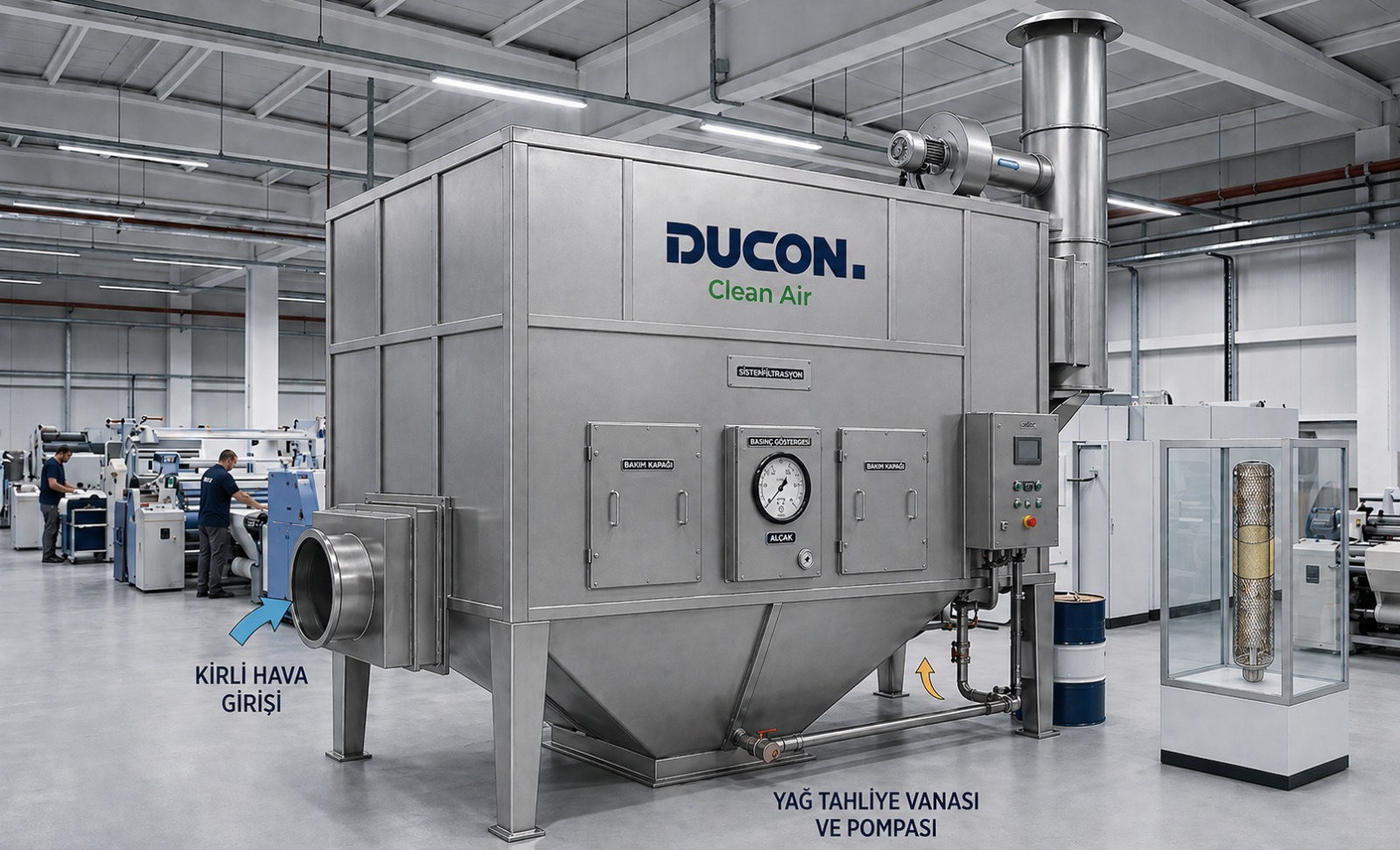
Access doors: Doors on the upper and lower sections of the unit provide safe, fast entry to the system.
Steam connections: Steam ports at the top and bottom of the vessel can be used for steam quenching/dewaxing and for cleaning the filters—especially useful when waxy compounds are present.
Sloped-to-drain floor: The unit base is sloped toward a drain to facilitate removal of solids that may settle in the hopper.
Pre-filter service: The pre-filter is cleanable and can be removed via the access door for thorough cleaning.
Replacement filters: Supplied installation-ready (pre-packed); no repacking is required.
Side service covers: Convenient side covers provide access to the filter elements; no lifting equipment is required for filter maintenance.
Sequence of Operation
The exhaust gas first enters the cooling stage. Cooling is critical because it condenses most
organics and promotes coalescence of sub-micron particles.
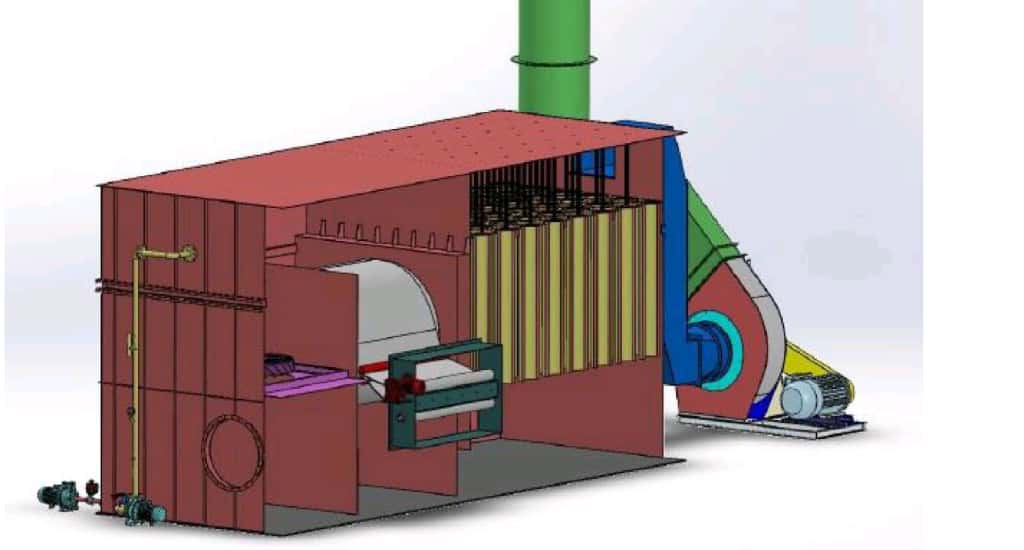
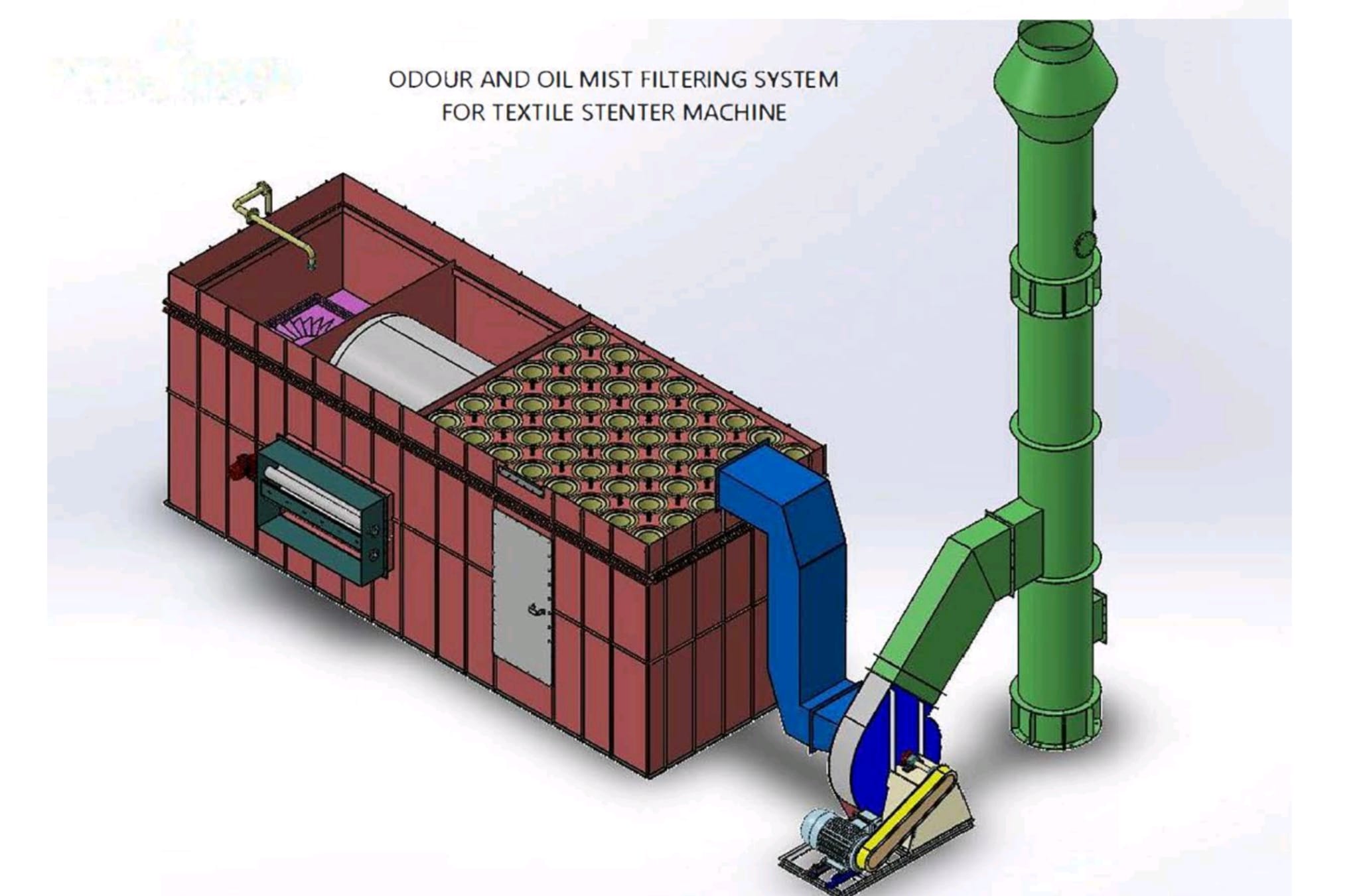
Adiabatic cooling (cyclonic tray washer):Cooling is performed adiabatically on a fixed cyclonic tray using water as the medium.
The cyclonic washer uses turbulent air motion to create aggressive air–water contact and also
removes a portion of larger particulates from the exhaust stream.
Water recirculation and makeup:Cooling water is stored in an integrated tank within the system. To minimize consumption, water is
recirculated, and automatic makeup compensates for evaporation losses.
Pre-filtration (droplet/particle removal):As the cooled air exits the wash tray, it enters the pre-filter. In addition to contaminants,
most water droplets are removed, which lowers the differential pressure across the fiber-bed filters
and protects them from sticky surface loading. As the medium loads, ΔP rises; a
Photohelic® differen
Why Choose the DUCON® DFY-RF5000 RAM Filter?
The DUCON® DFY-RF5000 RAM Mist Collector Systems deliver state-of-the-art technology
aimed at boosting your profitability. Whether you operate a single line or multiple plants,
DUCON provides the optimum solution.
The Nature of Textile Emissions
In textile production, process exhaust from RAM (stenter) ovens naturally produces visible
“smoke” or blue haze due to the evaporation of light fractions (hydrocarbons).
As these vapors condense, they form sub-micron aerosols that are inherently difficult to capture
with conventional filters.
Limits of Conventional Approaches
Dry dust filters: Designed for dry particulate, they do not drain recovered mist well, often causing frequent media changes.
Electrostatic precipitators (ESPs): Surfaces foul quickly, driving maintenance cost and downtime; under unfavorable conditions they can also pose a potential fire hazard.
Wet scrubbers alone: When used as a stand-alone solution on RAM exhaust, they may not consistently achieve the required final clarity/opacity control at high mist loads.
DUCON® Solution: DFY-RF5000 Fiber-Bed System
High efficiency, low ΔP: Excellent collection in the 0.1–3 µm range with low initial pressure drop and long service life.
Integrated architecture: Cyclonic adiabatic cooling + indexing pre-filter + fiber-bed coalescing stage for effective sub-micron aerosol removal.
Reduced maintenance: Indexing pre-filter lowers sticky load; fiber-bed drainage minimizes surface loading and extends maintenance intervals.
Scalability: Modular design for single-line or multi-line plants; straightforward retrofit into existing lines.
Compliance ready: Headroom to meet increasingly stringent air-quality requirements over the coming years.
Bottom Line
Thanks to the combination of high efficiency and low maintenance cost,
DUCON® RAM Mist Collector Systems are the preferred method for controlling textile
production emissions. By advancing fiber-bed filtration to a new level, DUCON helps ensure
your systems will continue to meet tightening air-quality standards for years to come.