Skip to content
Cartridge Filter

Cartridge Filter

Cartridge Filter is a compact dry-filtration system that combines high filtration area in a modular body for fine and light dust applications.

Call Directly

Fast project discussion

Talk to the technical team without waiting for a form

Share capacity, material, temperature, process, and site constraints by phone or email; the team can respond with clear technical next steps.

Cartridge Filter

Dry Collection

DUCON

Product Gallery

Cartridge Filter

4 images
Cartridge Filter
Cartridge Filter
Cartridge Filter
Cartridge Filter

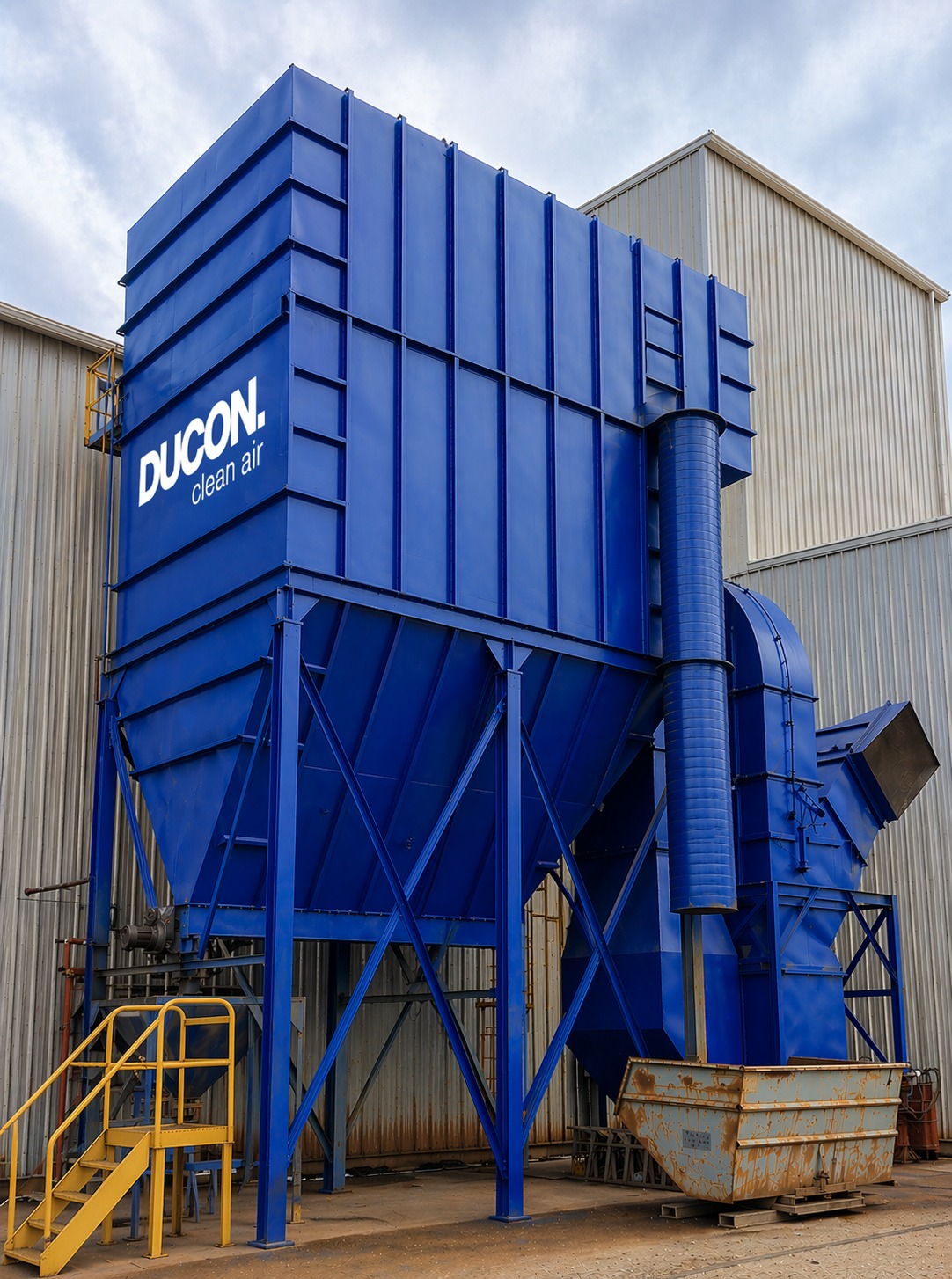
Ducon Cartridge Dust Collector

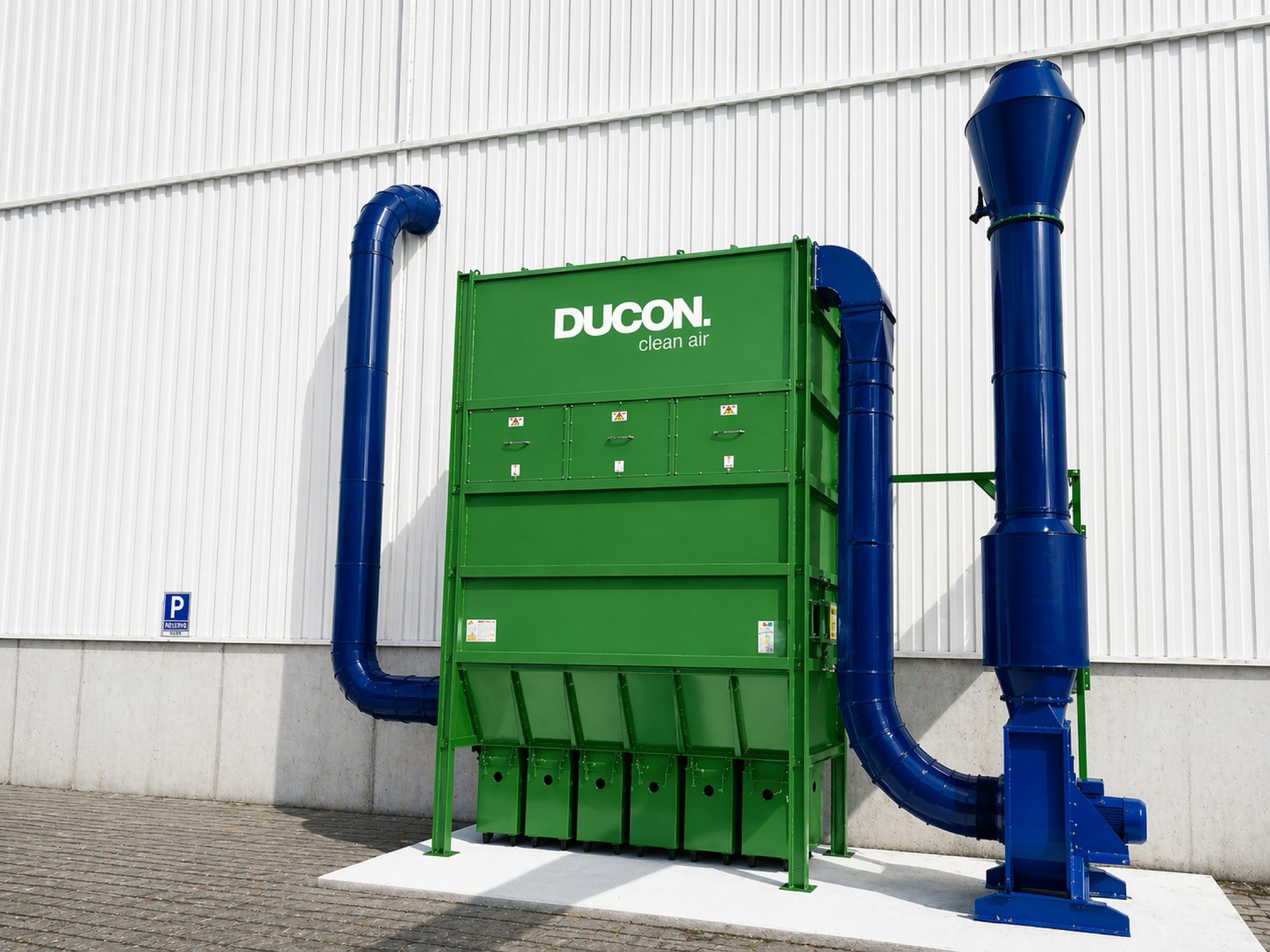
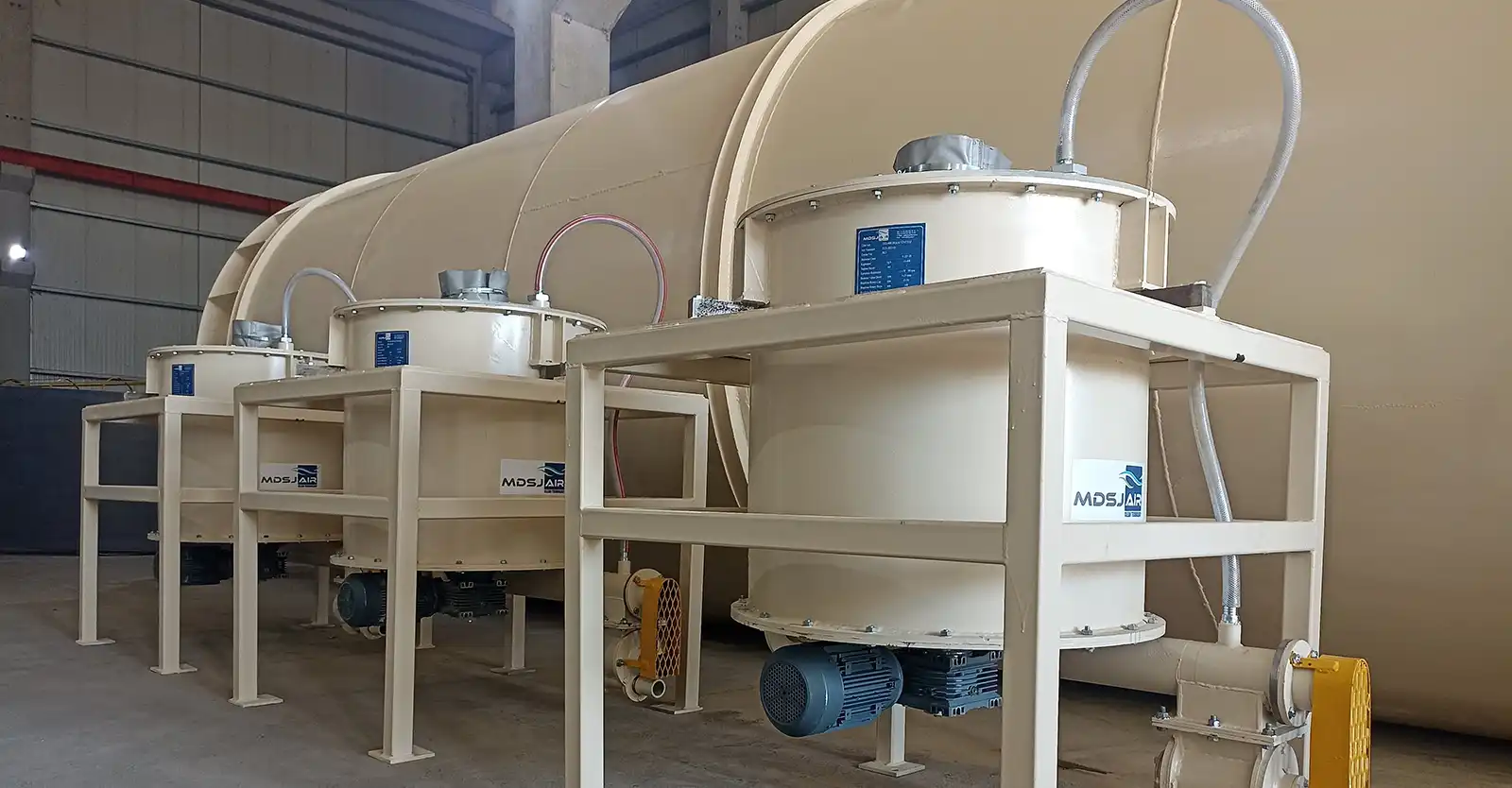
The cartridge dust collector Kompac Air by MDSJ is a dry filtration system used to purify air from suspended solid particles.

Advantages

The installation of the cartridge dust collector Kompac Air allows treatment of a wide range of pollutants, by ensuring the quality of the air in the production environment and protection for workers. Filter elements cleaning is managed by pressure drop reading, favouring a lower compressed air consumption and an increased life for cartridges. The cartridge dust collector Kompac Air has a high filtering surface, it is compact, easy to handle and transport and quick to install.

How it works

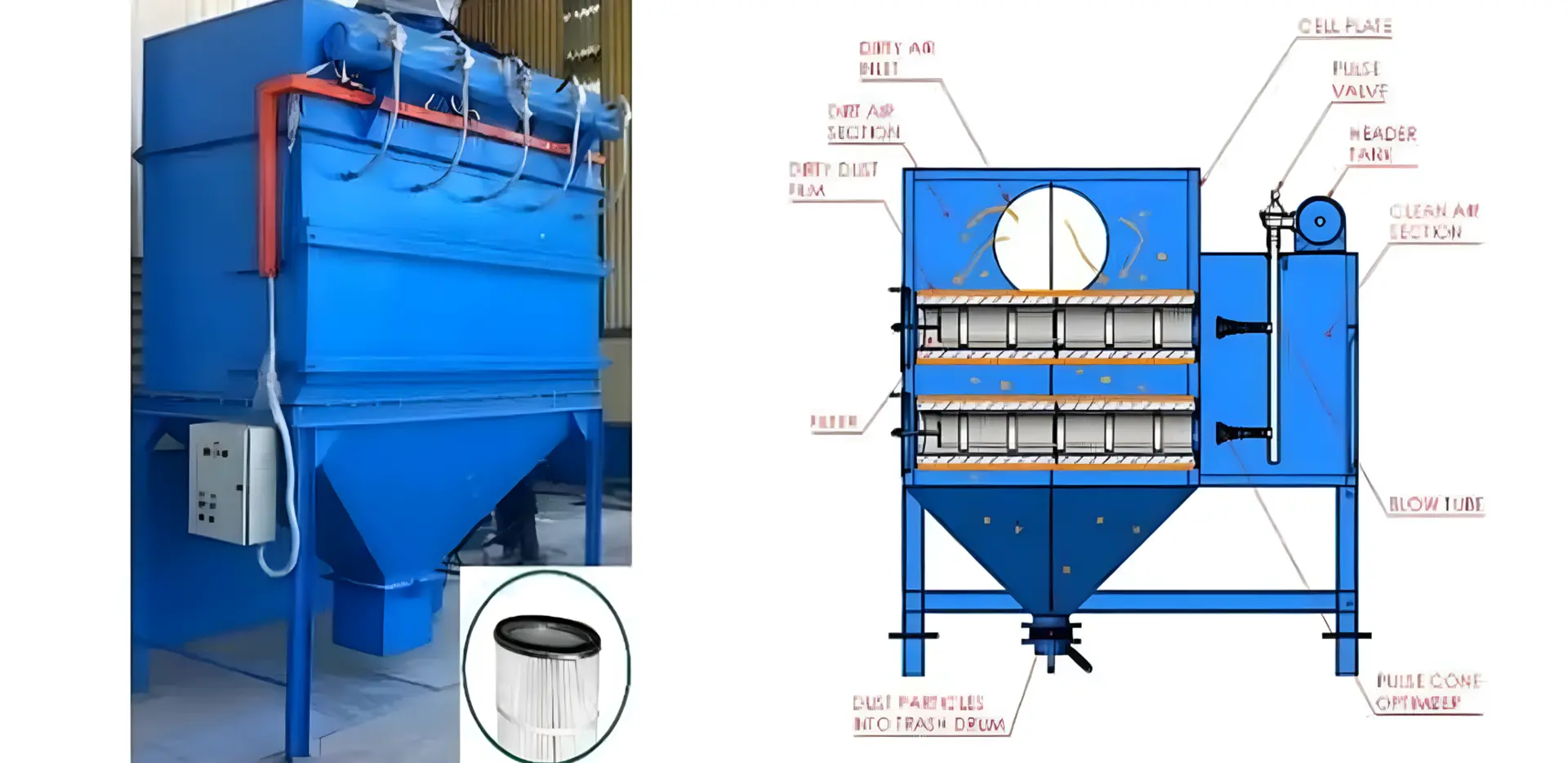
The dusty air is conveyed to the cartridges from the outside to the inside, depositing the impurities on the external part of the filter elements and in the collecting hopper. A compressed air jet, stored in a special tank, is injected cyclically in the cartridges, creating a wave of shaking able to detach and topple the particles deposited on the external part of the cartridges.

Standard equipment for all configurations

  • Filtration chamber

  • Hopper with support legs

  • Maintenance door

  • Cleaning pneumatic system of the cartridges controlled by differential pressure switch

  • Optional equipment for all configurations


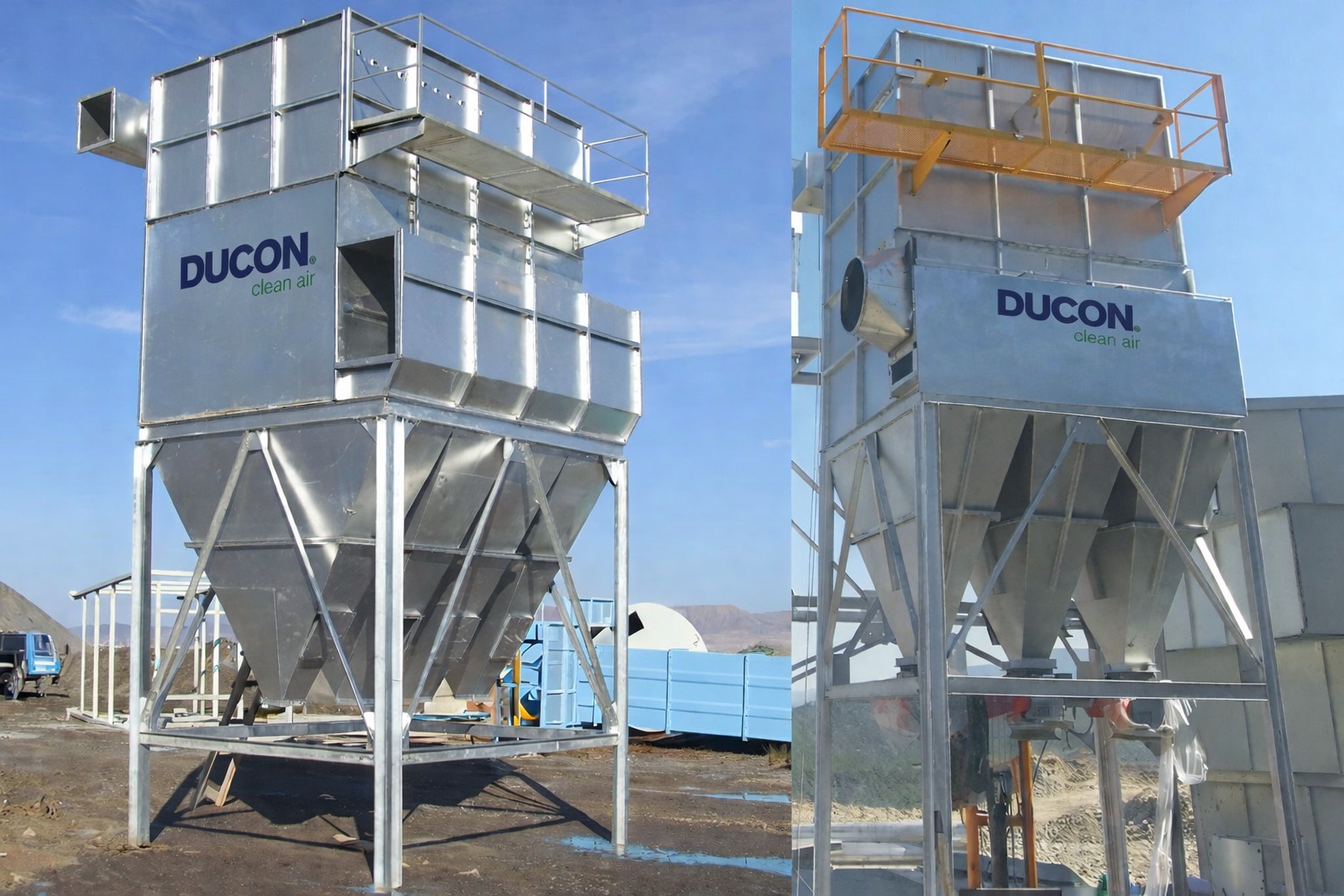
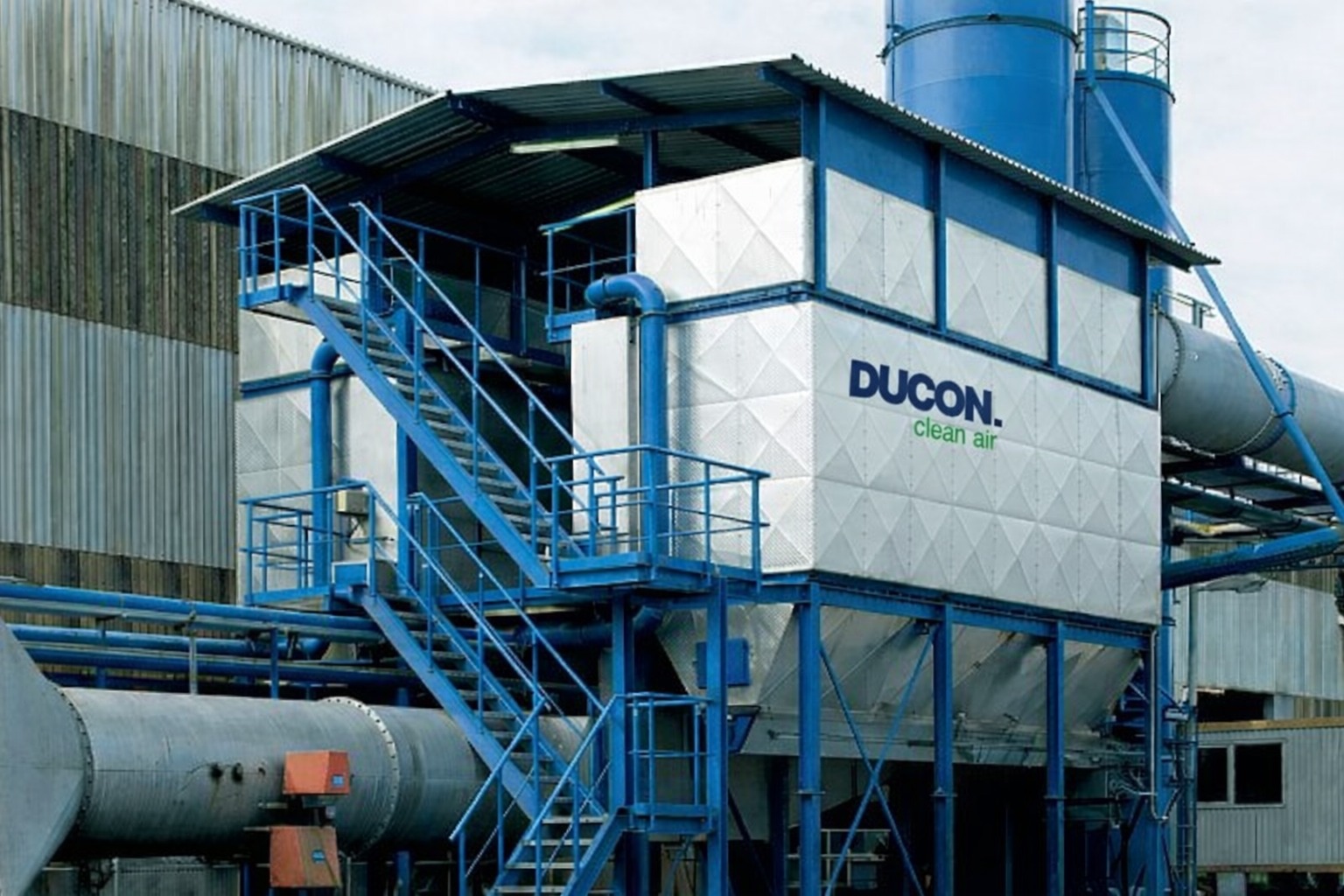
Staircase and walkway to access the maintenance door

  • Tank cover

  • Control panel cover

  • Pressure regulator

  • Electrical panel

The cartridge dust collector Kompac Air is modular in its main parts directly by the costumer according to specific needs and type of use. The different configuration in the catalogue comes from the mix of the following variants:

Type of inlet of dirty air (presence or not of pre-filtering chamber for the collection of the biggest dust, it has the task of protecting the cartridges from excessive load of pollutant) Type of dust discharge (collection bin; rotary valve for continuous discharge; combined action of screw and rotary valve) Means of access to the maintenance door and its placement Possibility to use in ATEX area (presence or not of components suitable for potentially explosive mixtures)

Cartridge Dust Collector

Configuration with dirty air inlet directly into the hopper, frontal extraction system of the filtering elements, dust discharge in a special bin placed under the hopper.

Optional equipment for the configuration

Deflector in hopper

Fan + soundproof box to lower the noise produce by the engine (on the top or on the ground)

Operating Principle

  • Dust-laden air enters the housing and passes across the outer surface of pleated filter cartridges; dust is retained on the media surface while clean air filters from outside to inside.
  • The pleated geometry packs a large filtration area into a small volume; on nanofiber- or PTFE-membrane-coated media the particles stay largely on the surface (surface filtration) instead of embedding deep in the media.
  • When a set differential-pressure threshold is reached, solenoid valves fire a brief reverse burst of compressed air into the cartridge (reverse-pulse); the shock wave cracks the dust cake and drops it into the hopper.
  • Cleaning is sequenced across cartridge groups one at a time, so cleaning happens online while the unit keeps running and airflow is uninterrupted.

Technical Specifications and Capacity Range

  • Airflow: typically 500 - 100,000 m³/h (scaled with modular cartridge cells).
  • Operating temperature: typically ≤80°C with cellulose/blend media, ≤135°C with 100% spunbond polyester media - cartridge collectors run at a lower temperature range than baghouses and are not suited to very hot gas streams.
  • Filtration efficiency: ≥99.9% with nanofiber or PTFE membrane; high capture on sub-micron fine dust.
  • Cartridge size: typically Ø325 mm diameter with 660/1000/1200/1500 mm lengths; roughly 15-25 m² of pleated media area per cartridge.
  • Filtration velocity (air-to-media): typically 0.6 - 1.5 m/min; can-velocity (upward rise velocity) is additionally limited on fine dust.
  • Pulse pressure: 5-7 bar compressed air; on-demand (pressure-controlled) cleaning minimizes air consumption.
  • Differential pressure (ΔP): typical operating point 100-180 mmH2O.

Cartridge Media Options

  • Cellulose - most economical, for dry medium-to-coarse dust, typically ≤65-80°C; not suitable for humid/oily streams.
  • Cellulose/synthetic blend - more resistant to moisture and abrasion than cellulose, typically ≤80-95°C.
  • Spunbond polyester (100% synthetic) - washable, moisture-resistant, typically ≤135°C; preferred for general-purpose fine dust.
  • Nanofiber-coated media - surface filtration for sub-micron fine dust and welding fume; lower ΔP and better cake release.
  • PTFE membrane laminate - for the most demanding fine dust, sticky/hygroscopic dust, and continuous surface cleaning; chemical resistance and low emission.
  • Anti-static / flame-retardant media - for combustible dust (ATEX) and spark-risk welding/cutting applications, with a conductive layer.

Industries and Applications

  • Welding fume collection - manual and robotic weld cells, capturing fume at the source.
  • Laser, plasma, and oxy-fuel cutting - fine metallic fume and oxide from cutting tables.
  • Grinding, sanding, and polishing - dry fine metal and composite dust.
  • Powder coating - recovery and filtration of overspray powder.
  • Pharmaceutical and food fine dust - fine processes such as tablets, granules, flour, and starch (ATEX may be required).
  • Thermal spray and coating - metalized fume and fine particulate.
  • Chemical and pigment - fine dry-powder conveying and filling lines.
  • Tight-space and compact plants - lines with low headroom where a baghouse will not fit.

Advantages

  • Compact footprint: pleated media fits the same filtration area into a much smaller body than a baghouse - high surface-to-volume ratio.
  • Superior fine-dust efficiency: nanofiber/PTFE surface filtration captures even sub-micron particles at high efficiency.
  • Easy maintenance: cartridges swap quickly with front access; less labor than bag-plus-cage replacement.
  • Low ΔP: surface filtration plus large area gives low pressure drop and fan-energy savings.
  • Continuous operation: reverse-pulse enables online cleaning without stopping production.
  • ATEX option: anti-static/flame-retardant media plus explosion venting for combustible-dust applications.

Selection Criteria

  • Dust character is decisive: cartridge collectors are ideal for dry, fine, non-fluidizing, low-to-moderate-temperature dust; suitability is checked first for sticky, hygroscopic, oily, or very hot dust.
  • Filtration velocity (air-to-media) and can-velocity must be carefully limited on fine dust; excessive velocity disrupts cake release and shortens cartridge life.
  • Watch the temperature ceiling: above ≤80°C on cellulose media, spunbond or a different technology is required.
  • For combustible dust, ATEX zone classification, anti-static media, and explosion venting/isolation should be planned early.
  • Vertical vs. horizontal cartridges: horizontal mounting for tight, low spaces; vertical mounting for higher efficiency and easier discharge.

Why DUCON Cartridge Dust Collectors, Why MDSJ Process?

  • Owner of the DUCON trademark in Europe, Asia, and Turkey - MDSJ Process is the DUCON cartridge dust collector manufacturer in this geography.
  • Designing and manufacturing industrial dust collection in Turkey under the DUCON brand since 1986 - 40 years of field experience.
  • Compact cartridge solutions for welding fume, laser/plasma cutting, fine dust, and tight-space applications; nanofiber and PTFE membrane media options.
  • Turnkey: design + manufacturing + site installation + commissioning + emission testing + operator training from a single supplier.
  • Direct trilingual engineering support and documentation (TR / EN / DE).
  • Safe design for ATEX-required combustible fine-dust lines with anti-static media, explosion venting, and isolation.

Frequently Asked Questions

What is a cartridge dust collector?

A cartridge dust collector is a dry filtration system that captures fine industrial dust on pleated filter cartridges and cleans them automatically with reverse bursts of compressed air (reverse-pulse). The pleated geometry packs a large filtration area into a compact body and delivers ≥99.9% efficiency on fine dust.

What is the difference between a cartridge filter and a bag (jet-pulse) filter?

A cartridge filter uses pleated media and offers typically 2-3x more filtration area in the same volume, so it is more compact and ideal for fine dust and fume. A baghouse is stronger at higher temperatures (≤260°C) and very high airflows. Cartridge collectors run at a lower temperature range (typically ≤80-135°C).

What applications is a cartridge dust collector suited to?

It is ideal for welding fume, laser/plasma/oxy-fuel cutting fume, grinding and sanding dust, powder coating, pharmaceutical and food fine dust, thermal spray, and tight-space installations. It performs best on dry, fine, low-to-moderate-temperature dust.

Which cartridge media should I choose?

Cellulose for economical dry dust (≤80°C), spunbond polyester for general-purpose fine dust (≤135°C), nanofiber-coated media for sub-micron fine dust and welding fume, PTFE membrane for sticky/hygroscopic dust and low emission, and anti-static/flame-retardant media for combustible-dust risks.

What temperature can a cartridge filter handle?

Typically ≤80°C with cellulose/blend media and ≤135°C with 100% spunbond polyester media. Cartridge collectors operate at a lower temperature range than baghouses; for very hot gas streams a bag (Nomex/PTFE fabric) solution is more appropriate.

How does a cartridge dust collector clean itself?

When differential pressure reaches the set point (typically 100-180 mmH2O), solenoid valves fire a brief reverse burst of compressed air into the cartridge (reverse-pulse); the dust cake cracks and drops into the hopper. Production never stops — cartridges are cleaned online in sequence.

What efficiency does a cartridge filter achieve?

With nanofiber or PTFE membrane media it achieves ≥99.9% efficiency, with high capture even on sub-micron fine dust. With correct media and filtration velocity, emissions <10 mg/Nm³ are achievable.

Is a cartridge filter suitable for ATEX (combustible dust)?

Yes. For combustible-dust applications such as aluminum, magnesium, flour, sugar, pharmaceutical, or organic fine dust, it is designed ATEX-compliant with anti-static/flame-retardant media, explosion venting, and isolation. Zone classification should be defined early.

Who is the cartridge dust collector manufacturer in Turkey?

MDSJ Process designs, manufactures, installs, and commissions cartridge dust collectors in Turkey under the DUCON brand (MDSJ owns the DUCON trademark rights for Europe, Asia, and Turkey). Active since 1986, it delivers turnkey projects.

Quick Info

Pleated cartridge media delivers typically 2-3x the filtration area of bags in the same body volume - compact footprint
≥99.9% efficiency on fine dust, welding fume, and laser/plasma cutting fume via nanofiber/PTFE surface filtration (down to sub-micron)
Reverse-pulse (pulse-jet) automatic cleaning; vertical or horizontal cartridge mounting fits tight spaces

HTML Engineering Resources

Jump to the application page, reference project, and industry series without waiting for a PDF.

Discuss the Project Directly

Share product, capacity, and process details without filling out a form first.

Call Directly Send Email Open the quote form if preferred

Embed This Product

Copy the code below and paste it into your website.

Start a project discussion for this product

Reach the team directly by phone or email; the form is optional.

Call Email