 Türkçe
 English
 العربية
 Deutsch
How to Select a Jet-Pulse Baghouse Filter: An Engineer's Guide
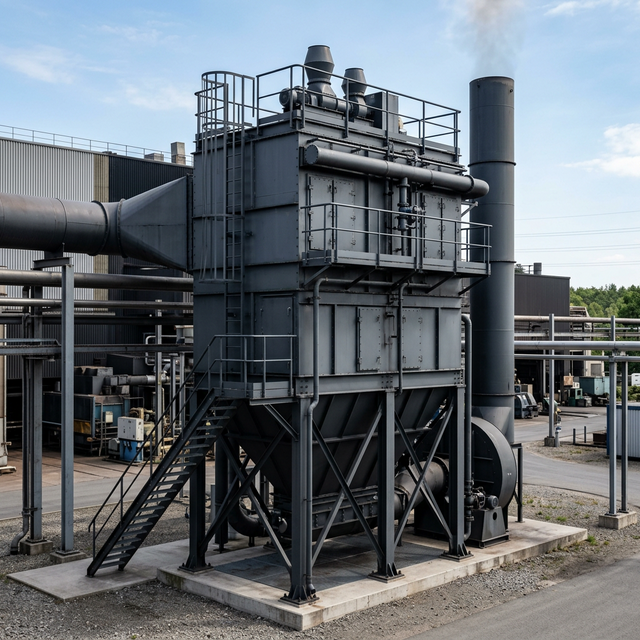
The jet-pulse baghouse is the most widely used dust collection system in industry, capturing fine dust with efficiencies up to 99.9% in facilities such as cement, iron and steel, foundry, food and mining plants. But behind the complaint "we installed a baghouse and emissions are still high" there is usually a wrong selection: an incorrect air-to-cloth ratio, a filter medium unsuited to the plant, or a poor cleaning design. This guide sets out the criteria for the right selection, drawn from our field experience since 1986.
How does jet-pulse cleaning work?
As the dirty air passes through the outer surface of the filter bags, the dust is retained on the surface and clean air is discharged from the inside. When the dust layer (cake) accumulating on the bag surface raises the pressure, electronic timer-controlled pulse (diaphragm) valves send a fraction-of-a-second blast of compressed air at 6-7 bar into the bags; the cake drops into the hopper below. The system cleans itself continuously, 24/7.
1) Air-to-cloth ratio (A/C) — the most critical parameter
The foundation of a correct design is the air-to-cloth ratio: the air flow passing through a unit of filter area. If set too high, dust is driven into the bag, pressure drop and emissions rise, and bag life is shortened. If set too low, the filter becomes needlessly large and expensive. The correct ratio is determined by engineering calculation according to dust type, particle size and cleaning method — jet-pulse is the cleaning method that permits the highest air-to-cloth ratio in the industry.
2) Filter bag medium — by temperature and chemistry
The wrong media = continuous bag replacement. The choice depends first on the flue gas temperature:
| Media | Continuous temperature (approx.) | Where it suits |
|---|---|---|
| Polypropylene (PP) | ~88°C | Low temperature, humid |
| Acrylic | ~125°C | Medium temperature, moisture resistance |
| Polyester (PET) | ~135°C | The most common general application |
| PPS (Ryton) | ~190°C | Acidic, high temperature (boiler, cement) |
| PTFE / Fiberglass | ~260°C | Very high temperature, abrasive/acidic |
Alongside temperature, moisture, stickiness and chemical attack also determine the media; on sticky or hygroscopic dust a surface coating (PTFE membrane) prevents blinding.
3) Cleaning system design
The pulse valves operate at 6-7 bar pressure. Cleaning is triggered by one of two methods: a fixed timer, or the more efficient differential-pressure (ΔP) approach — cleaning begins once roughly 75% of the manufacturer's recommended pressure differential is reached. ΔP-controlled cleaning saves both energy and bag life.
4) Expected emissions
In a properly designed jet-pulse baghouse, the outlet emission after cleaning is typically below 10 mg/Nm³; with the right media and membrane, single-digit levels are achievable. The exact value depends on dust type and design, and is confirmed by accredited measurement.
5 critical factors in selection
- Air flow (Nm³/h) and the correct air-to-cloth ratio
- Flue gas temperature → bag medium
- Dust character (particle size, moisture, stickiness, abrasion)
- Explosion risk (ATEX) — explosion venting/suppression is mandatory for combustible dust
- Cleaning method and maintenance access
Where is it used?
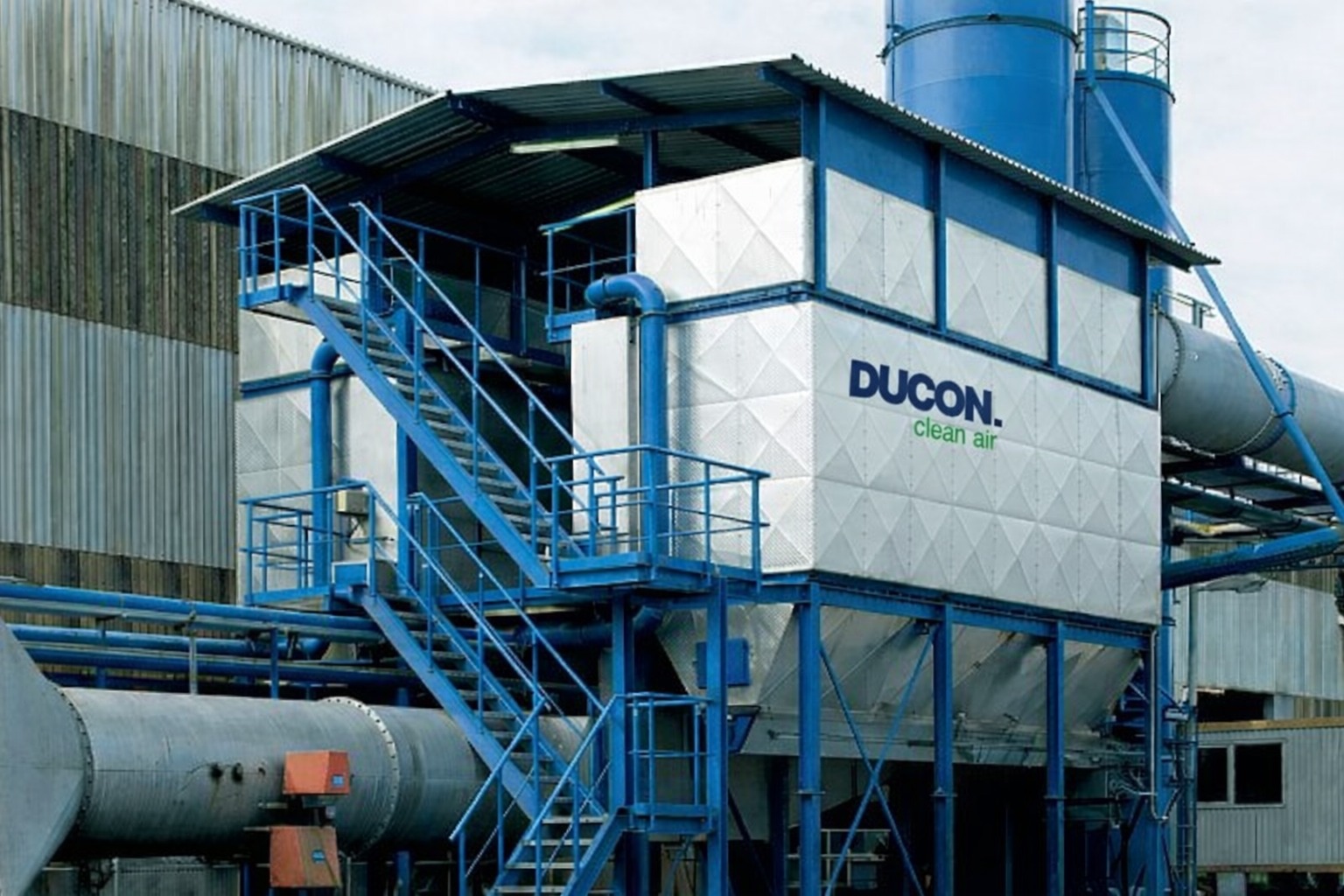
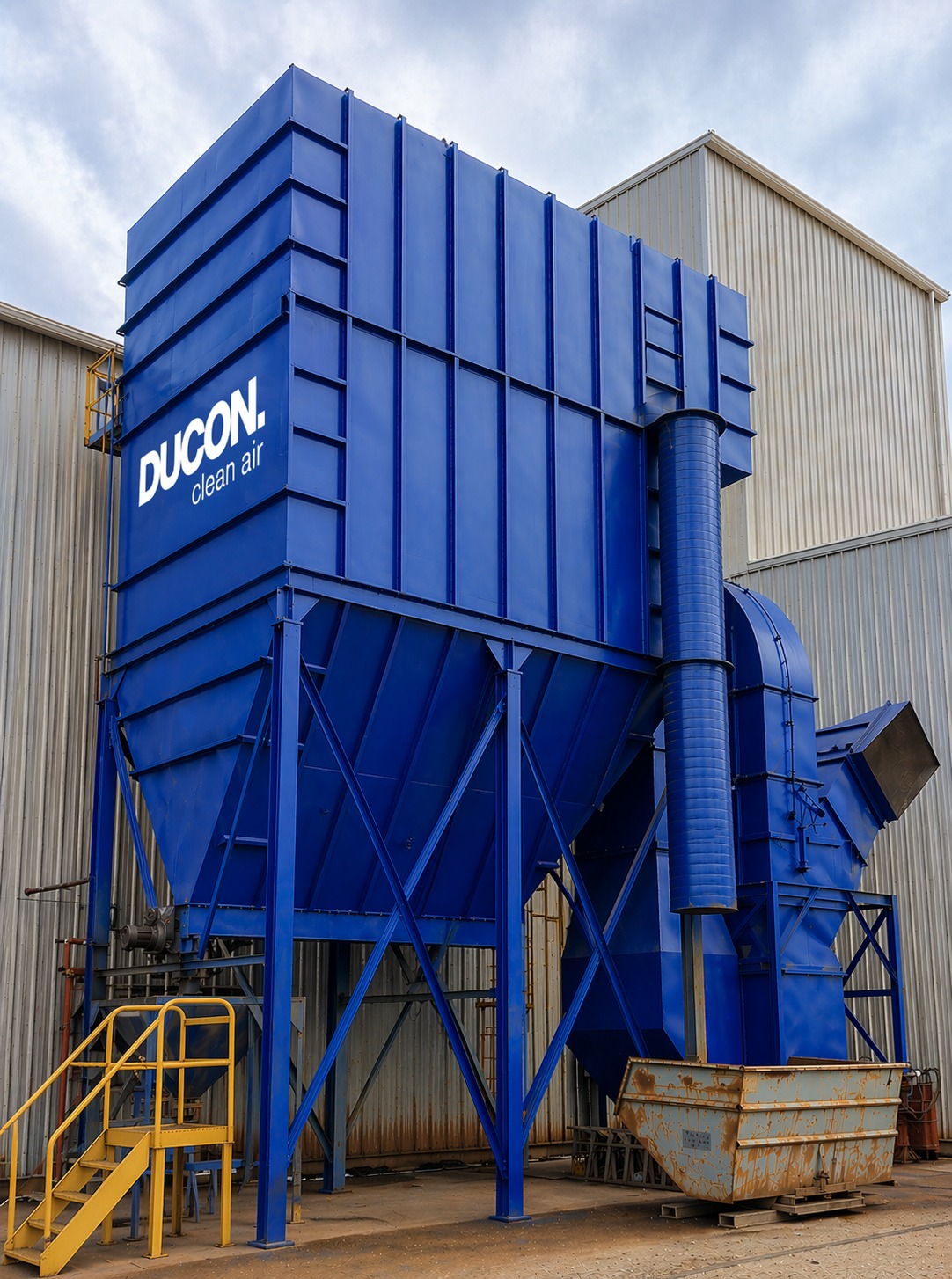
Cement and mining (including on top of silos), iron-steel and foundry melting furnaces, crushing-screening plants, fly ash filtration, food (flour/sugar), wood and pneumatic conveying lines. Detailed product family: DUCON jet-pulse baghouse filter, baghouse filters, and for confined spaces the flat bag filter.
Frequently asked questions
How often are the bags replaced?
With the right media and cleaning design, they last for years. Early wear is usually a sign of the wrong material, a high air-to-cloth ratio, or faulty cleaning.
My emissions are high — should I replace the bags?
First perform a stack measurement + ΔP check. The problem is often not the bag; it is a wrong ratio, a torn bag, or a defective pulse valve.
Up to what temperature can it withstand?
It depends on the media: polyester ~135°C, PPS ~190°C, PTFE/fiberglass up to ~260°C. The right selection starts with a temperature measurement.
Let's determine the right filter together
MDSJ Process has designed, manufactured and turnkey-installed jet-pulse baghouse filters under the DUCON brand since 1986. For a free site survey and technical assessment, contact us; explore our jet-pulse baghouse filter solutions.