 Türkçe
 English
 العربية
 Deutsch
How to Choose an Industrial Dust Collection System: An Engineer's Guide
A wrongly chosen dust collection system creates costs that last for years — from exceeding your emission limit and frequent bag changes to unplanned downtime and high energy bills. The right system, on the other hand, both ensures regulatory compliance and lowers operating cost. In this guide, drawing on the field experience we have gained across more than 4,500 projects since 1986, we explain step by step how to choose the right dust collection system for your plant.
First, know your dust: characterization is the foundation of selection
No system fits "every plant." The right choice begins by first measuring the properties of the dust and the gas. Before an engineer recommends a system to you, they must know these six parameters:
- Particle size (microns): Coarse dust (>10 µm) and sub-micron fine fume require entirely different solutions.
- Dust load (g/Nm³): A high concentration may require pre-separation (cyclone).
- Moisture and stickiness: Sticky/hygroscopic dust clogs the bags; a wet system may be needed.
- Temperature: The flue-gas temperature determines the filter media (polyester, PPS, PTFE, fiberglass).
- Explosivity (ATEX / Kst value): Metal, wood, sugar and aluminum dusts are explosive; the system must be designed ATEX-compliant.
- Chemical content: If acidic/corrosive gases are present, wet scrubbing or special media is essential.
Any system recommendation made without measuring this data is guesswork. The first step is always a site analysis.
The main dust collection systems, and when to use which?
1) Cyclone (Cyclone Separator) — coarse and heavy dust, pre-separation
A cyclone separates heavy and coarse particles by centrifugal force. On its own it does not deliver high efficiency, but it is an excellent pre-separator at high dust loads: by reducing the load on the main filter by 50-80%, it extends bag life. It is ideal for coarse dust such as wood chips, crushing-screening, and bulk material transfer. It is generally used ahead of a baghouse filter; the separated material is mostly conveyed to the silo via pneumatic conveying systems.
2) Baghouse / Jet-Pulse Filter — fine dust, highest efficiency
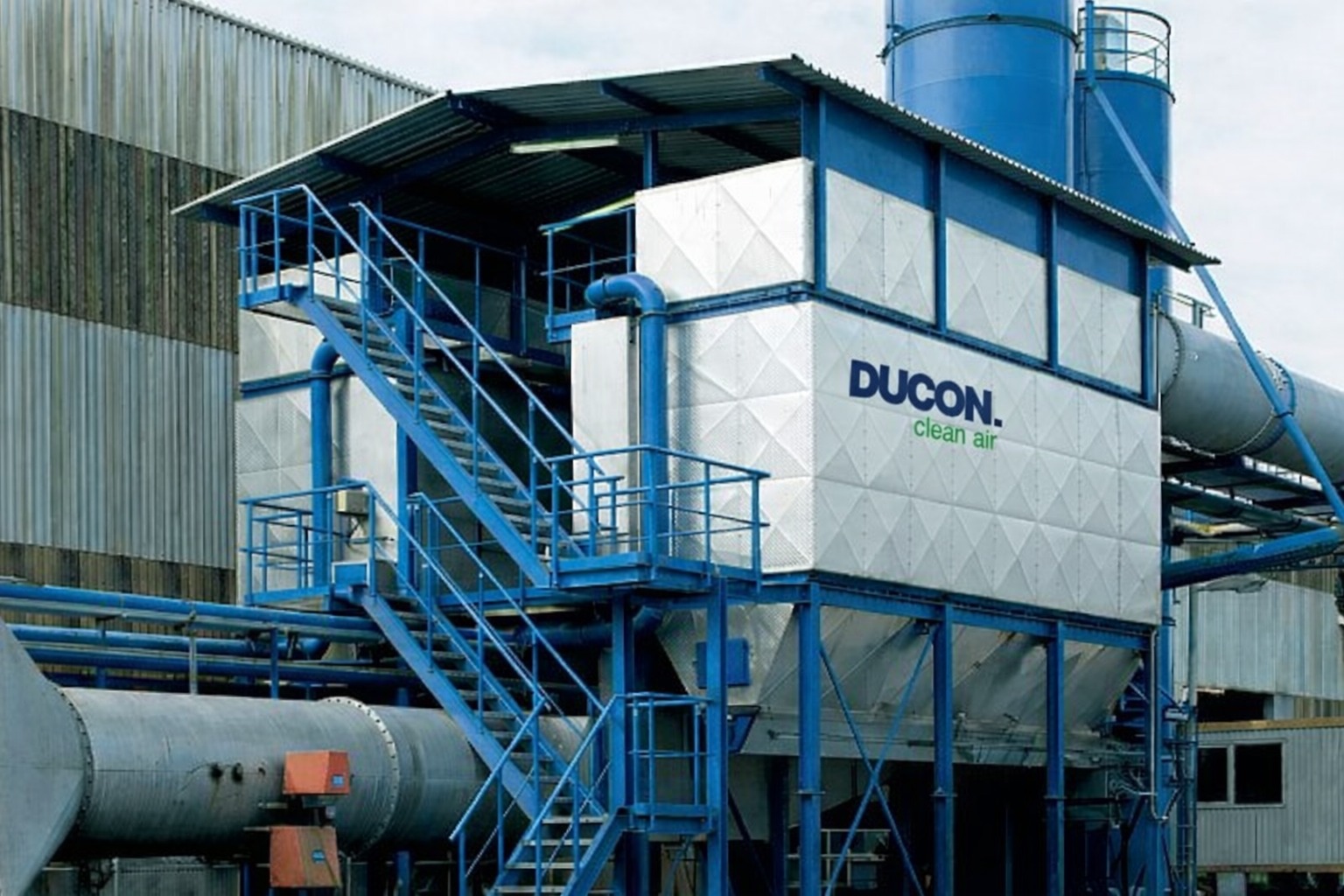
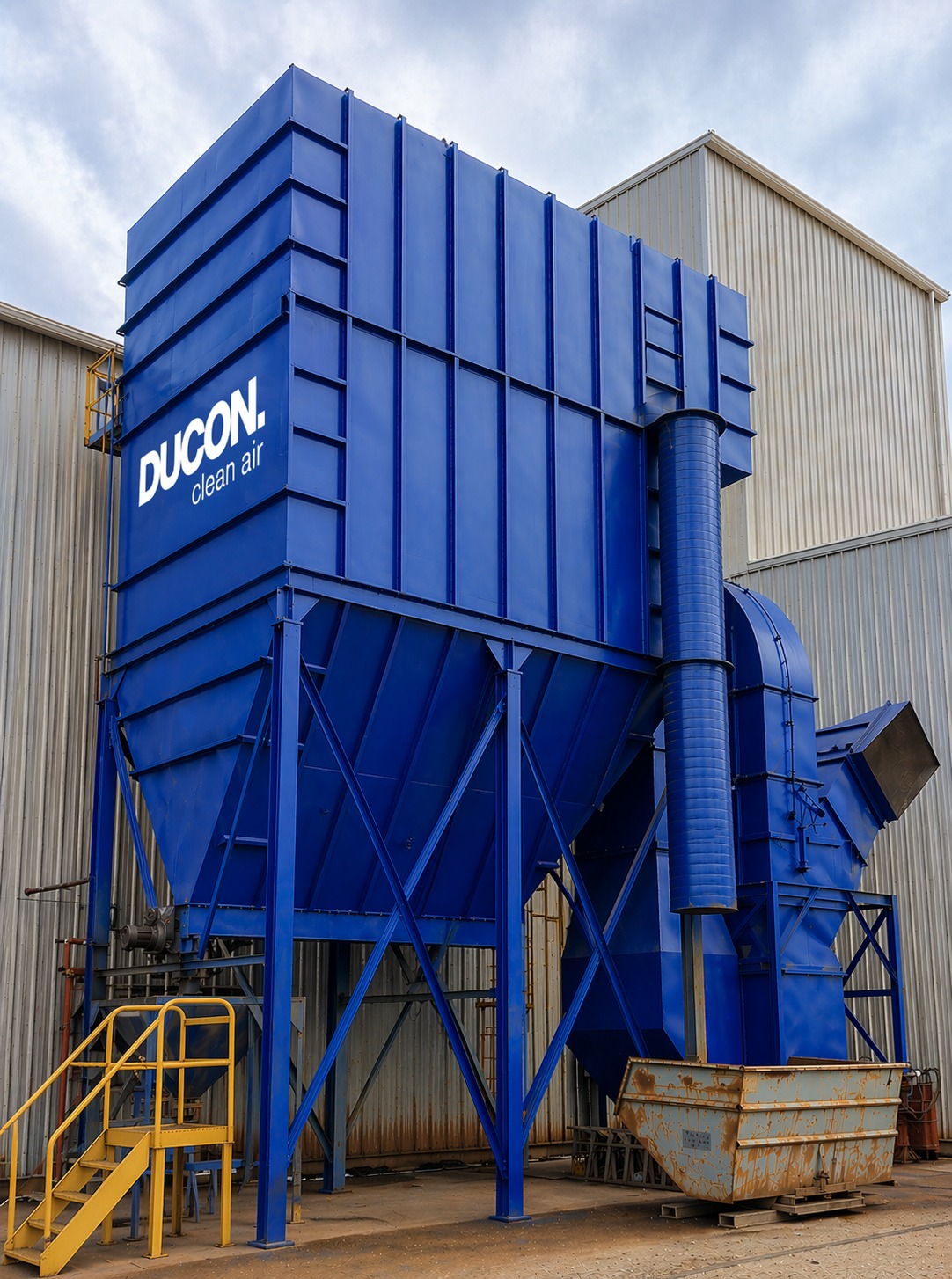
Industry's most common and highest-efficiency solution. Dust is captured on the surface of the filter bags; the accumulated dust is cleaned automatically by jet-pulse (a reverse compressed-air pulse). When the right media is selected, it delivers capture efficiency of up to 99.9% and low emissions (down to single-digit mg/Nm³ levels). Cement, iron and steel, foundry, food, plastics, wood — it is the standard in almost every sector where dry, fine dust is present. In processes that require ATEX, it is designed with explosion venting/suppression. Details: DUCON jet-pulse baghouse filter systems.
3) Cartridge Filter — compact footprint, fine dry dust
Pleated (folded) cartridges offer a very large filtration area in a small volume. They are preferred in space-constrained applications with low-to-medium dust loads that are dry and non-abrasive (laser/plasma cutting, grinding, powder coating).
4) Wet Scrubber and Venturi — sticky, wet, flammable, or gas-laden dust
Dust is captured by washing it with water/liquid. It is the solution for cases where a baghouse filter would be risky: sticky/hygroscopic dust, high moisture, hot streams, or dusts that carry an explosion/fire risk (such as aluminum and magnesium). It can also treat dust plus gas/odor/acid vapor at the same time. A venturi scrubber delivers high efficiency even on sub-micron particles thanks to its high pressure drop. Textile stenter (RAM) stacks (oil mist), galvanizing (acid/zinc fume), and chemicals (VOC/odor) are typical applications. Details: DUCON wet scrubber and venturi scrubber solutions.
5) Electrostatic Precipitator (ESP) — very high flow, very fine dust
It charges the particles electrically and collects them on plates. With its low pressure drop it is economical at very high air flow rates (large power/cement plants); however, its investment cost and space requirement are high.
Quick comparison table
| System | Ideal dust | Typical efficiency | Strength | Watch out for |
|---|---|---|---|---|
| Cyclone | Coarse, heavy | 70-90% (coarse) | Low cost, pre-separation, high load | Inadequate on fine dust |
| Jet-Pulse Baghouse Filter | Fine, dry | 99-99.9% | Highest efficiency, low emissions | Not suitable for sticky/wet dust |
| Cartridge Filter | Fine, dry, low load | 99%+ | Compact, small footprint | Clogs at high load/stickiness |
| Wet Scrubber / Venturi | Sticky, wet, flammable, gas-laden | 90-99% (venturi) | Dust + gas together, explosion safety | Requires wastewater management |
| ESP | Very fine, very high flow | 99%+ | Low pressure drop, high flow | High investment and space |
Practical recommendation by sector
- Cement / mining: Jet-pulse baghouse filter (including silo-top) + pneumatic conveying; cyclone pre-separation for coarse dust.
- Iron and steel / foundry: Jet-pulse baghouse filter (ATEX) for the melting furnace and molding line, with PPS/PTFE media at high temperature.
- Textile (stenter/RAM stack): Wet scrubber or high-efficiency fiber-bed filter for oil mist + blue haze.
- Galvanizing / surface coating: Wet scrubber for acid/zinc fume.
- Plastics / rubber: Wet scrubber / venturi for polymer fume and VOCs.
- Food: ATEX-compliant jet-pulse filter + pneumatic conveying for flour/sugar dust.
The 7 critical factors in system selection
- Emission target: The efficiency needed to get below your regulatory limit.
- Air flow (Nm³/h): Must be calculated together with the hood/extraction design.
- Pressure drop and energy: Fan power = annual electricity cost; a low ΔP pays off over the long term.
- Filter life and maintenance: The right media + cleaning cycle = little downtime.
- Explosion safety (ATEX): Mandatory with flammable dust.
- Waste management: Collected dust in a dry system, wastewater in a wet system.
- Total cost of ownership (TCO): Not just the investment; energy + maintenance + downtime.
Emission legislation: why is the right system mandatory?
In Türkiye, industrial facilities are required, under the Regulation on the Control of Industrial Air Pollution (SKHKKY), to comply with flue-gas emission limits and to have periodic emission measurements carried out. The limits vary by process, capacity and pollutant; this is why your system must be designed with an efficiency that brings you below your own limit. The right system does not only protect you from fines; it also prevents neighbor complaints, inspection risk and reputational loss. The best approach is to determine your plant-specific limit and the required efficiency through accredited measurement + engineering calculation.
The 4 most common mistakes
- Buying a system without measuring the dust — the wrong media/technology = constant problems.
- Looking only at the investment price — a cheap system turns out expensive through high energy + maintenance.
- Neglecting the hood/extraction design — a filter cannot rescue dust that is not captured at the source.
- Skipping ATEX — with flammable dust, safety design is not up for negotiation.
Frequently asked questions
Baghouse filter or wet scrubber?
For dry, fine dust, the highest efficiency is with a baghouse filter. If the dust is sticky/wet/flammable, or if gas/odor/acid vapor is also present, a wet scrubber/venturi is the right choice.
Is a cyclone sufficient on its own?
Usually not. A cyclone separates coarse dust but cannot capture fine dust; in most plants it is used as a pre-separator ahead of a baghouse filter.
What emission value can the system reach?
A properly designed jet-pulse baghouse filter can reach single-digit mg/Nm³ levels. The exact value depends on the dust type and the design; it is confirmed by measurement.
My current system exceeds the limit — what should I do?
First have a stack measurement + dust analysis carried out; the problem is most often the wrong media, insufficient area, or a faulty cleaning system. The solution may not always be a complete new system.
Let's determine the right system together
MDSJ Process, under the DUCON brand, has designed, manufactured and installed turnkey industrial dust collection, gas treatment and pneumatic conveying systems since 1986. Let's determine the right system together with a free, plant-specific site survey and technical assessment. You can review our products on our products page and reach us via our contact page.