Skip to content
Pneumatische Dichtstromförderung

Pneumatische Dichtstromförderung

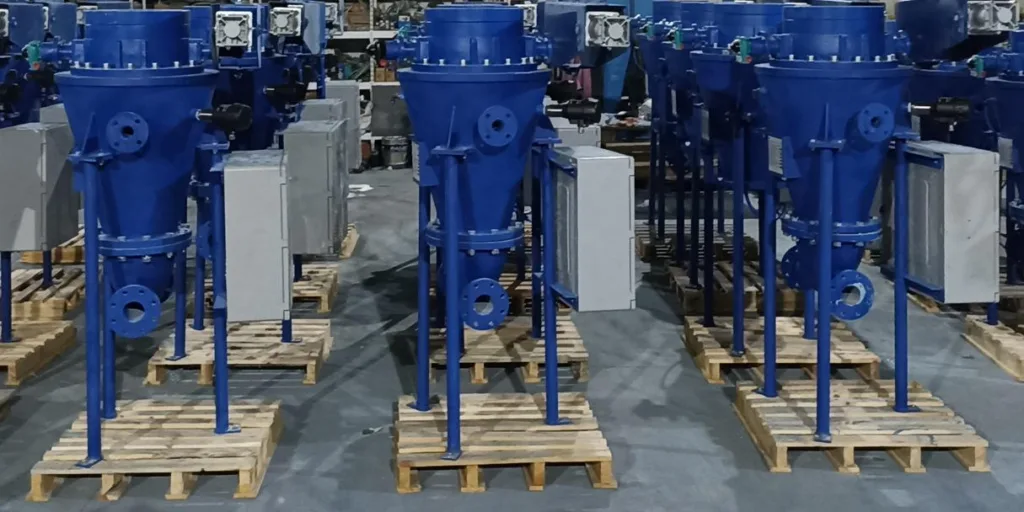
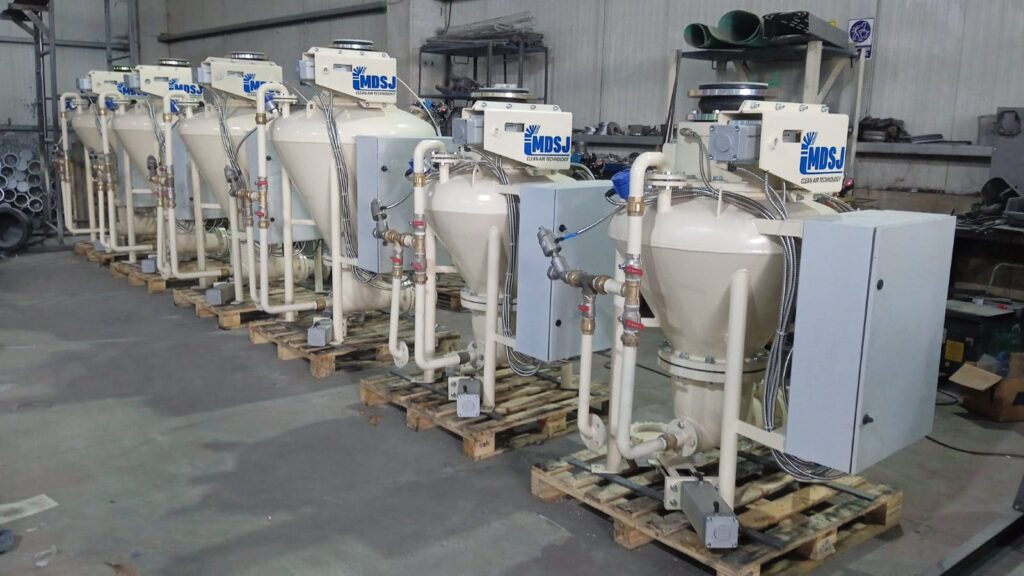
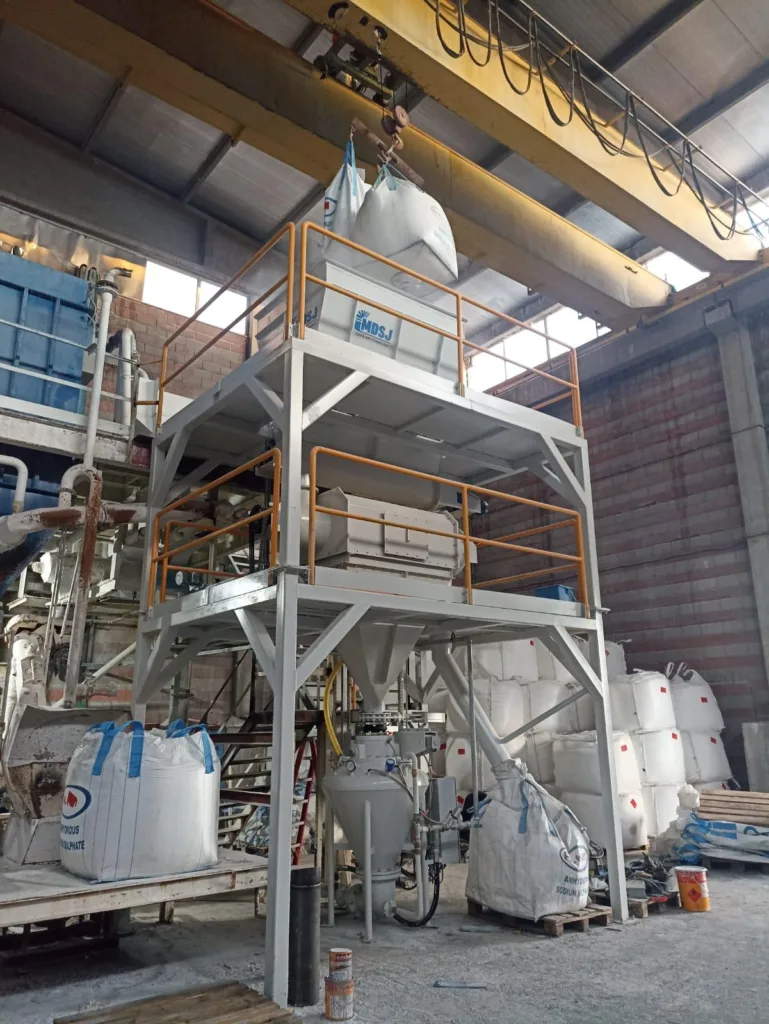
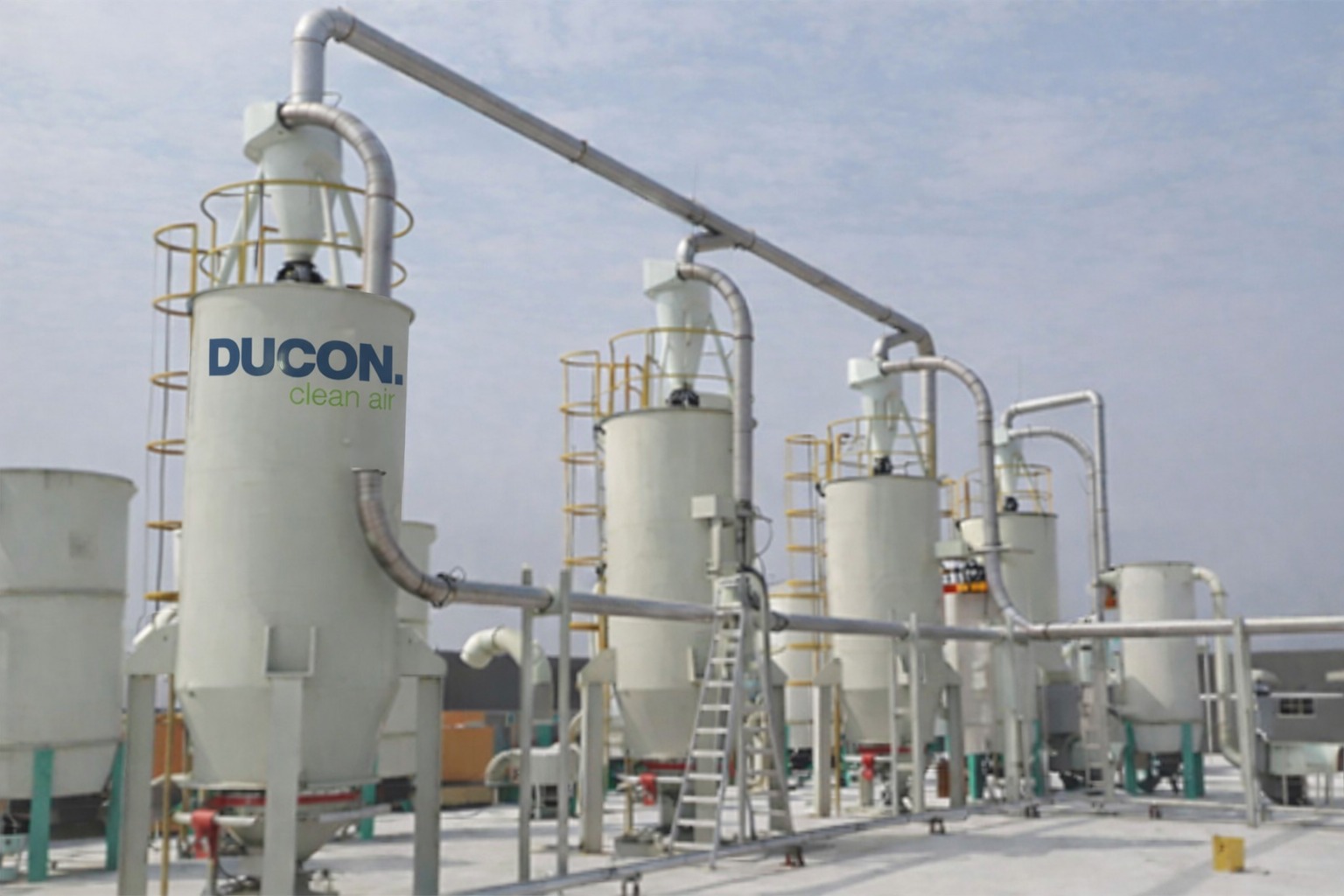
DUCON Dichtstromförderung DUCON Dichtstromförderung zeichnet sich durch eine Förderung mit hohem Überdruck bei niedriger Geschwindigkeit aus. Die gängigsten Regime der pneumatischen Dichtstromförderung mit Überdruck sind...

Call Directly

Fast project discussion

Talk to the technical team without waiting for a form

Share capacity, material, temperature, process, and site constraints by phone or email; the team can respond with clear technical next steps.

Pneumatische Dichtstromförderung

Pneumatic Conveying

DUCON

Product Gallery

Pneumatische Dichtstromförderung

4 images
Pneumatische Dichtstromförderung

DUCON Dichtstromförderung

DUCON Dichtstromförderung zeichnet sich durch eine Förderung mit hohem Überdruck bei niedriger Geschwindigkeit aus. Die gängigsten Regime der pneumatischen Dichtstromförderung mit Überdruck sind:

Kontinuierlicher Dichtstrom, Hochdruck – niedrige Geschwindigkeit: Das Material wird unterhalb der Saltationsgeschwindigkeit in einem bewegten Schüttbett-Strömungsbild (rollend oder schleppend) gefördert. Am Aufgabepunkt liegen die Geschwindigkeiten bei 3-10 m/s, am Endpunkt bei etwa 15-18 m/s. Der kontinuierliche Dichtstrom wird für die Förderung von Pulvern eingesetzt, die sich leicht fluidisieren lassen und die Luft gut zurückhalten können.

Förderregime der pneumatischen Dichtstromförderung mit Schüttbettströmung:

Diskontinuierlicher Dichtstrom, Hochdruck – niedrige Geschwindigkeit: Das Material wird unterhalb der Saltationsgeschwindigkeit in einer Pfropfenströmung gefördert, bei der die Pfropfen durch Luftpolster voneinander getrennt sind. Die Pfropfen füllen den gesamten Rohrquerschnitt vollständig aus. Die Geschwindigkeiten am Aufgabepunkt liegen in der Regel bei 1-5 m/s, am Austragspunkt bei 7-10 m/s.


STEIGERN SIE DIE EFFIZIENZ DES MATERIALTRANSFERS BEI GLEICHZEITIGER REDUZIERUNG VON ANLAGENVERSCHLEISS UND PRODUKTDEGRADATION

WESENTLICHE VORTEILE

  • Unser Dichtstromsystem bietet Optionen wie den LUFTVERSTÄRKER (Air Booster), Spül- und Nicht-Spül-Konzepte sowie kontinuierliche Förderung. Der LUFTVERSTÄRKER wird strategisch entlang der Förderleitung platziert und injiziert Luft, wodurch der erforderliche Fördergasdruck und -durchfluss reduziert werden. Dies erhöht die Systemzuverlässigkeit und senkt die Betriebskosten.

    • Nicht-Spül-Konzept - Material kann bewusst in der Förderleitung verbleiben, wodurch die negativen Auswirkungen von Hochgeschwindigkeits-Spülvorgängen minimiert werden. Dies trägt dazu bei, Materialabrieb, Komponentenverschleiß, kostspielige Wartungen und Anlagenstillstände zu vermeiden.

    • Kontinuierliche Förderung - ermöglicht die unterbrechungsfreie Förderung von Materialien, ohne dass zum Druckabbau und zum Wiederbefüllen des Förderbehälters angehalten werden muss.

Der Feststoff-Dichtstrom ist mit seiner attraktiven Betriebswirtschaftlichkeit und sehr geringen Rohrerosion die beste Wahl für bruchempfindliche Materialien.

Förderregime der pneumatischen Dichtstromförderung mit Feststoffströmung Die folgende Tabelle bietet einen Vergleich der vier Regime:

StrömungsregimeMittlere Geschwindigkeit (m/s)Luft-Material-Verhältnis
Dünnstrom28-35über 100:1
Kontinuierlicher Dichtstrom7.5-22.520-100:1
Diskontinuierlicher Dichtstrom2.5-12.5unter 30:1
Feststoff-Dichtstrom2.0-5.0unter 20:1

In der obigen Tabelle misst das Luft-Material-Verhältnis die Systemeffizienz. Es ist das Verhältnis des Gewichts des geförderten Materials (lbs/kg) zum Gewicht des eingesetzten Fördergases (lbs/kg). Aufgrund der niedrigen Fördergeschwindigkeit werden Dichtstromsysteme häufig in Anwendungen bevorzugt, in denen das Produkt bruchempfindlich, abrasiv oder entmischungsanfällig ist, wie etwa bei Sand, Glas und Koks. Die meisten Anwendungen profitieren von der niedrigen Geschwindigkeit, wenn nicht durch den geringeren Verschleiß, dann durch den reduzierten Luftverbrauch. Als Faustregel gilt: Die beste Wirtschaftlichkeit wird mit der niedrigstmöglichen Fördergeschwindigkeit erzielt.

Dense Phase vs Dilute Phase Comparison

  • Dense Phase - air velocity 3-8 m/s, high material/air ratio, ideal for abrasive and fragile materials; low energy use.
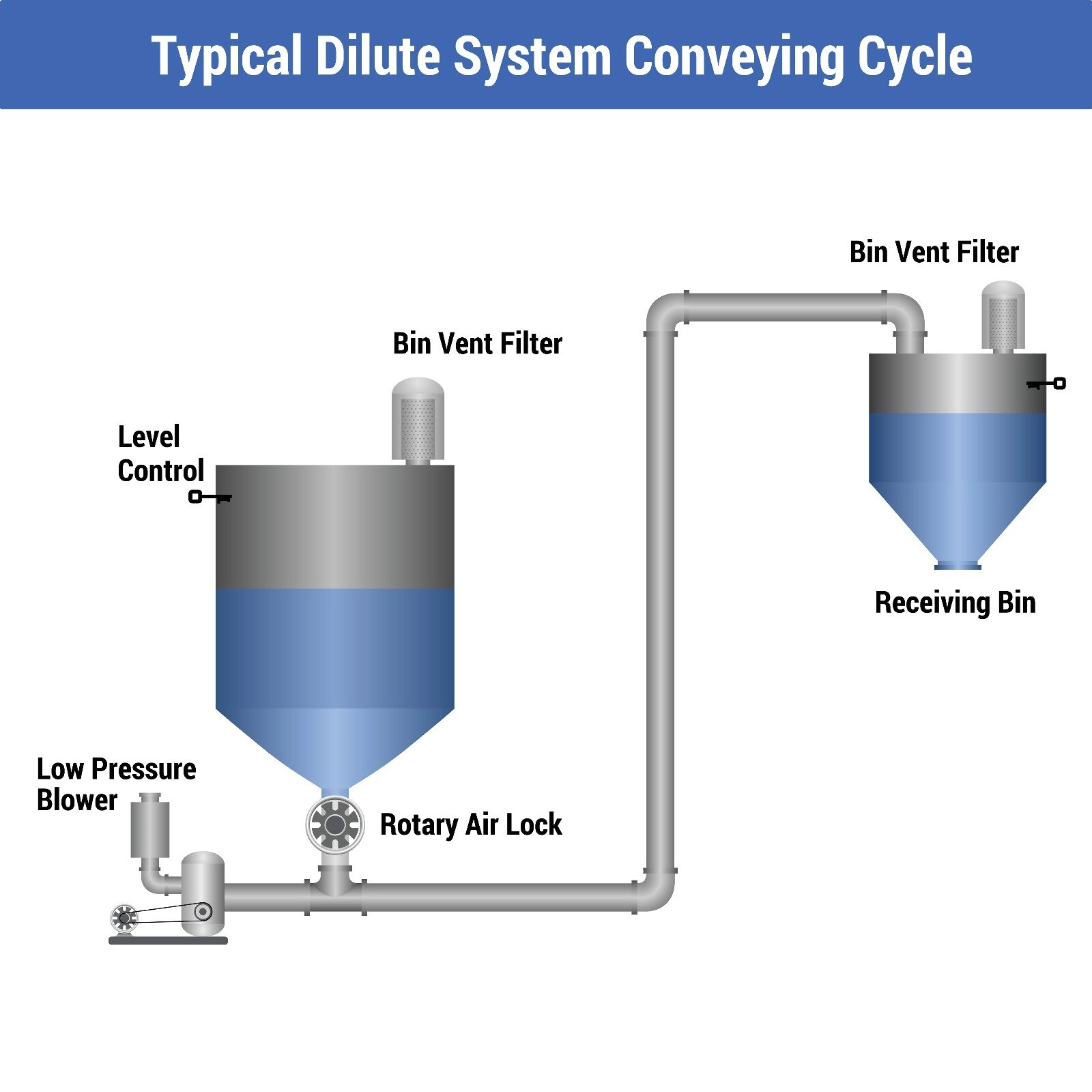
  • Dilute Phase - air velocity 18-30 m/s, low material/air ratio, for free-flowing non-abrasive materials; simpler equipment, easier maintenance.
  • Dense phase delivers 60-80% less wear on abrasive materials (alumina, silica sand, iron ore).
  • Dilute phase has lower initial cost; dense phase has lower operating cost.
  • As distance increases, dense phase becomes more advantageous (lower pressure loss); dilute phase wins at short distances.

Technical Specifications and Capacity Range

  • Capacity: 1 - 200 tons/hour (up to 500 tons/h with parallel modular lines).
  • Distance: 10 - 500 m horizontal, up to 100 m vertical (combined routes up to 800 m total).
  • Operating pressure: dense phase 1-6 bar, dilute phase 0.5-1 bar (vacuum -0.3 to -0.8 bar).
  • Particle size: 0.1 mm - 20 mm (special applications up to 50 mm).
  • Temperature: ambient to +200°C (up to +400°C with refractory lining in special apps).
  • Air velocity: dense phase 3-8 m/s, dilute phase 18-30 m/s.
  • Pipeline: carbon steel, stainless steel (304/316L), ceramic or basalt lined (for abrasive materials).

Industries Served

  • Cement - clinker, raw meal, finished cement, gypsum, lime dust transfer; silo-to-silo, packing, loading.
  • Iron-steel and Foundry - pulverized coal injection, coke, alumina, ferro-alloys, flux material.
  • Power Plant - ash transfer (DUCON Ashveyor / Denseveyor), fly ash and bottom ash silo transfer.
  • Food and Flour - flour, sugar, cocoa, spices, animal feed, grain; ATEX-compliant closed line.
  • Chemical and Plastic - PVC, PE, PP granules, pigment, filler, chemical powders.
  • Glass and Ceramic - silica sand, soda ash, batch material, frit.
  • Mining and Mineral - bauxite, alumina, gypsum, calcite, talc, mica.
  • Pharma and Cosmetic - sensitive powder transfer, GMP-compliant lines, cross-contamination prevention.

System Components

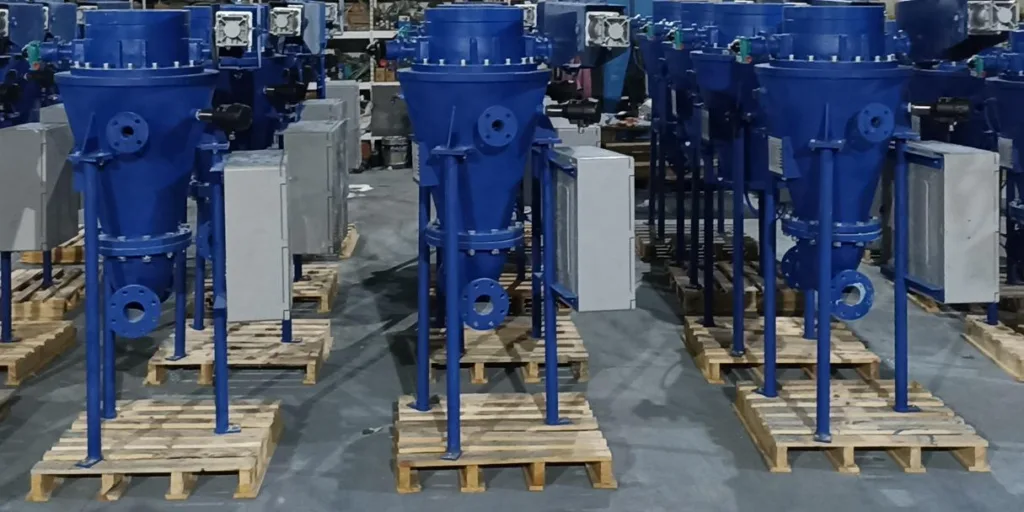
  • Feed equipment: Rotary valve (airlock), screw feeder, denseveyor / vessel sender.
  • Air source: Blower (dilute phase), compressor (dense phase), pulsed-air system.
  • Pipeline: correct diameter selection, bend design (long radius), ceramic / basalt lining for wear conditions.
  • Divert valve: routing to multiple silos or lines.
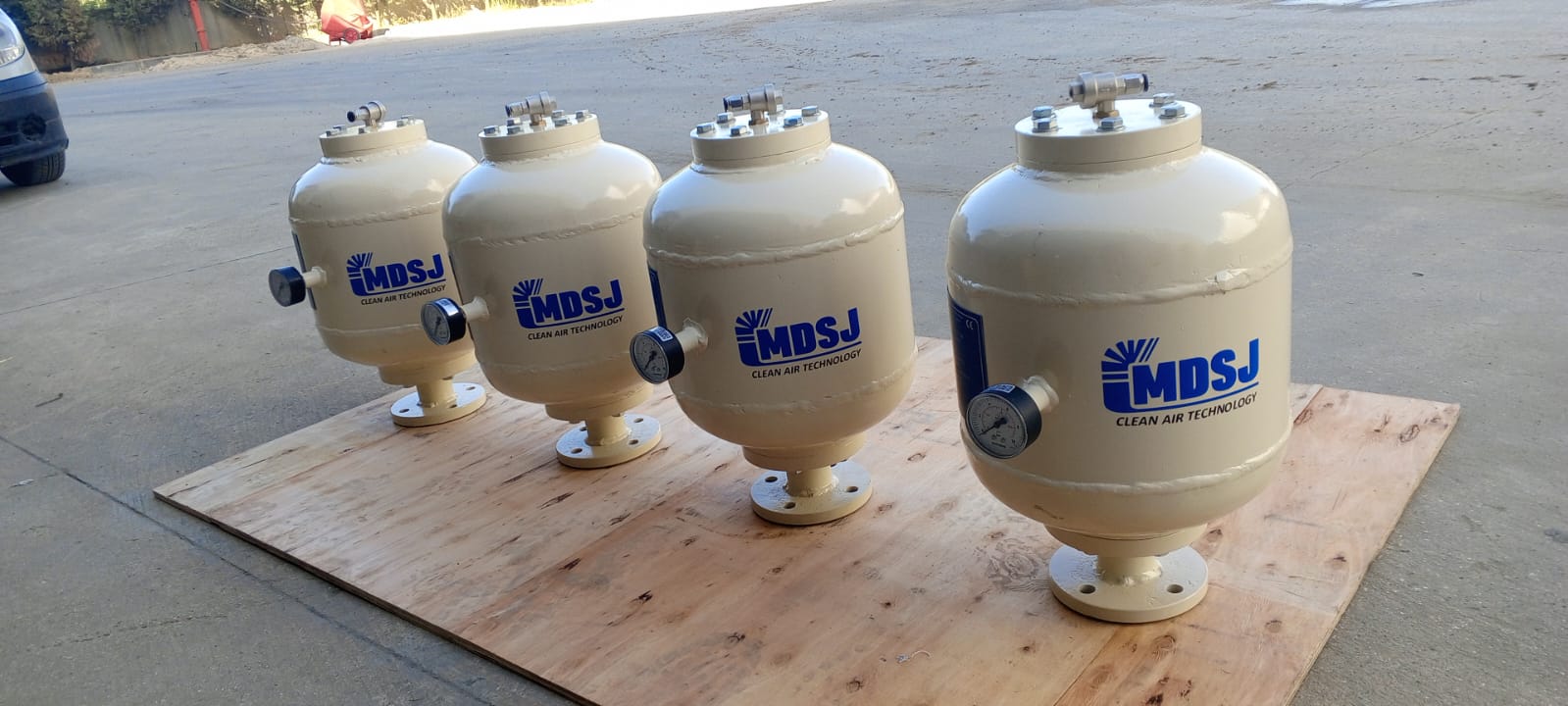
  • Receiving equipment: jet pulse filter (dust separator), cyclone, silo.
  • Control: PLC-based automation with flow-based process management.

Advantages

  • Closed line - no dust leakage, clean operation, safe environmental compliance.
  • Flexible geometry - reaches long distances and multiple turns where mechanical conveyors cannot go.
  • Multi source/destination - one line can route to multiple silos via divert valves.
  • Low maintenance - few moving parts (pipeline is passive); maintenance focuses on feed and air source.
  • Hygiene and food safety - GMP, HACCP, FDA compliant line construction possible.
  • ATEX compliant - certified installation for explosive dust lines.

Selection Criteria

  • Particle size, bulk density, abrasiveness, and fragility are core design inputs.
  • Line length, bend count, air velocity, and pressure regime must be assessed together.
  • The choice between dense and dilute phase should balance energy, wear, and product integrity.
  • For explosive dust (flour, sugar, aluminum, magnesium), ATEX compliance must be planned early.

Operation and Maintenance Notes

  • Feed stability, airlock selection, and line build-up behavior should be monitored routinely.
  • Bend wear, plugging tendency, and blower/compressor loading are the main maintenance themes.
  • If velocity is too high, wear rises; if too low, build-up and plugging become more likely.
  • 1 major + 2-4 intermediate maintenance cycles per year, plus bend wear inspection, is standard.

Why DUCON Pneumatic Conveying, Why MDSJ Process?

  • Owner of the DUCON trademark in Europe, Asia, and Turkey — MDSJ Process is the DUCON pneumatic conveying manufacturer in this geography.
  • Designing and manufacturing DUCON pneumatic conveying systems in Turkey since 1986 — 40 years of field experience.
  • DUCON Denseveyor / Ashveyor — the reference architecture for power-plant ash transfer; field-proven dense-phase technology for abrasive materials.
  • Three-product single-supplier advantage — pneumatic conveying + filtration + scrubber integrated from one engineering team; on combined projects, accountability stays in one place.
  • Direct trilingual engineering support (TR / EN / DE) — international operator training, commissioning, and documentation.
  • Turnkey: material flow testing, line design, manufacturing, site installation, commissioning, performance testing, and operator training — all in one place.

Frequently Asked Questions

What is pneumatic conveying?

Pneumatic conveying is an industrial system that transports dust, granules, or powder materials inside a closed pipeline using pressurized air flow. It is a closed, hygienic, flexible alternative to mechanical conveyors.

What is the difference between dense phase and dilute phase?

Dense phase runs at low velocity (3-8 m/s) with high material/air ratio - ideal for abrasive and fragile materials, low energy. Dilute phase runs at high velocity (18-30 m/s) with low material/air ratio - for free-flowing materials, simpler equipment.

Which industries use pneumatic conveying?

Cement, iron-steel, power plant (ash), food (flour, sugar, feed), chemical, plastic (PVC/PE/PP granule), glass, ceramic, mining, pharma, and cosmetic.

What is the capacity range?

DUCON pneumatic conveying systems range from 1 ton/hour to 200 tons/hour on single line, up to 500 tons/h with parallel lines.

What is the distance limit?

Standard 10-500 m horizontal, up to 100 m vertical. With dense-phase architecture, combined routes can reach 800 m total.

Can abrasive materials be pneumatically conveyed?

Yes — with dense-phase design and ceramic/basalt-lined pipe and bends, abrasive materials like alumina, silica sand, and iron ore can be transported safely.

Which system is best for ash transfer?

For power plant ash transfer, DUCON Denseveyor (dense phase) and Ashveyor systems are used. They are the standard solution for both fly ash and bottom ash silo transfer.

Is ATEX required for pneumatic conveying?

In lines with explosive dust (flour, sugar, aluminum, magnesium, organic) ATEX zone classification and compliant equipment are mandatory. DUCON systems are optionally ATEX certified.

What is the energy consumption?

Typical consumption is 1-3 kWh/ton (dense phase) and 2-5 kWh/ton (dilute phase). Varies with distance, pressure, and material properties.

Which materials are not suitable for pneumatic conveying?

Sticky, moist, very large (>50 mm), or strongly agglomerating materials are not suitable. Mechanical conveyors or screw feeders are better for these cases.

Who manufactures pneumatic conveying systems in Turkey?

MDSJ Process designs, manufactures, installs, and commissions industrial pneumatic conveying systems (Dense Phase, Dilute Phase, Denseveyor, Ashveyor) in Turkey under the DUCON brand (MDSJ owns the DUCON trademark rights for Europe, Asia, and Turkey). Active since 1986.

How long does installation take?

Standard project: design + manufacturing 10-14 weeks, site installation 3-6 weeks (depending on line length), commissioning 1-2 weeks. Total typical project 4-6 months.

Quick Info

Dense & dilute phase - closed transfer for dust, granules, ash, minerals
50 - 200 tons/h capacity, up to 500 m distance
Sector-specific design for cement, iron-steel, food, chemical, and power plants

HTML Engineering Resources

Jump to the application page, reference project, and industry series without waiting for a PDF.

Discuss the Project Directly

Share product, capacity, and process details without filling out a form first.

Call Directly Send Email Open the quote form if preferred

Embed This Product

Copy the code below and paste it into your website.

Start a project discussion for this product

Reach the team directly by phone or email; the form is optional.

Anrufen E-Mail