Skip to content
Katalytisches SNCR für DeNOx-Systeme

Katalytisches SNCR für DeNOx-Systeme

SNCR- und SCR-DeNOx-Systeme von MDSJ: Ammoniak- oder Harnstoff-Eindüsung, optimierte Wabenkatalysator-Module zur NOx-, CO- und VOC-Minderung in der Industrie.

Call Directly

Fast project discussion

Talk to the technical team without waiting for a form

Share capacity, material, temperature, process, and site constraints by phone or email; the team can respond with clear technical next steps.

Katalytisches SNCR für DeNOx-Systeme

Wet Collection

DUCON

Product Gallery

Katalytisches SNCR für DeNOx-Systeme

2 images
Katalytisches SNCR für DeNOx-Systeme

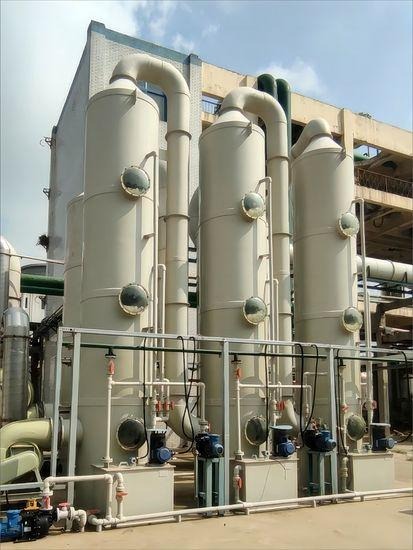
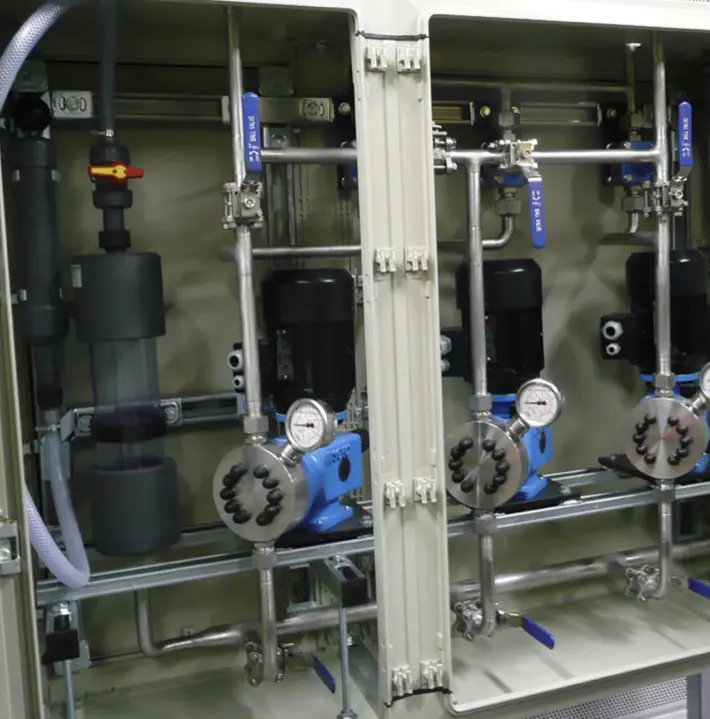
SNCR-Katalysator für DeNOx-Systeme

Die SNCR-DeNOx-Systeme von MDSJ arbeiten durch Eindüsung von Ammoniak oder Harnstoff in den Strahlungs- und Konvektionsbereich des Kessels, damit die Reduktionsreaktion im Rauchgas ablaufen kann. Das Reagenz kommt mit dem NOx im Rauchgas in einem definierten Temperaturfenster in Kontakt. Für Harnstoff liegt dieser Bereich bei etwa 800 °C–960 °C, für Ammoniak bei 500 °C–800 °C.

Das SNCR-System von MDSJ zeichnet sich durch geringe Investitionskosten aus und ist äußerst vielseitig einsetzbar. In Kombination mit anderen Technologien bietet es wirtschaftliche Vorteile gegenüber SCR-Systemen. Die SNCR-Technologie von MDSJ kann in der Energiewirtschaft, Stahl-, Zement- und Petrochemieindustrie, in Waste-to-Energy-Anlagen, der Glasindustrie und vielen weiteren Branchen eingesetzt werden.


Katalytisches SNCR-System

MDSJ bietet Systeme zur selektiven katalytischen Reduktion (SCR) an und verfügt über eine fortschrittliche extrudierte Wabenkörper-Technologie, die sich in Hunderten von Installationen zur Abscheidung von NOx, CO und weiteren flüchtigen organischen Verbindungen (VOC) in Kraftwerken, Zementwerken, Verbrennungsanlagen, Glasschmelzöfen, Salpetersäureanlagen und ähnlichen industriellen Anwendungen bewährt hat.

Optimierte SCR-Katalysatormodule

MDSJ liefert modernste, optimierte SCR-Katalysatormodule auf Basis einer Ultrafeinpulver-Technologie, die Porengröße, Partikelgröße und die Verteilung der Aktivmetalle auf den Trägermaterialien (TiO₂, Al₂O₃ usw.) gezielt steuert. Für Ihr neues Projekt oder den Austausch Ihres bestehenden Katalysators können wir hocheffiziente Katalysatoren zu äußerst günstigen Kosten liefern. Darüber hinaus bietet MDSJ einen umfassenden Service, einschließlich detaillierter Inspektion, Engineering-Beratung sowie Demontage des alten und Montage des neuen Katalysators.

DeNOx Technologies: SNCR and SCR

  • SNCR (Selective Non-Catalytic Reduction) — reagent (urea or ammonia) is injected directly into the hot flue gas within a typical 850-1100°C temperature window; no catalyst is used.
  • SCR (Selective Catalytic Reduction) — the reagent reacts with the gas over a catalyst bed in a typical 250-400°C range; the highest removal is achieved here.
  • Core reaction: NOx is reduced to nitrogen (N2) and water vapor (H2O) by ammonia (NH3) or ammonia released from urea — the end products are harmless.
  • SNCR offers moderate removal with lower capital cost and simple equipment; SCR is preferred for strict emission limits requiring high efficiency.
  • Hybrid solutions combine SNCR pre-reduction with an SCR polishing stage to optimize catalyst volume and reagent consumption.

Technical Specifications and Operating Range

  • Removal efficiency: SNCR typically 30-60%, SCR typically 80-95% (90%+ achievable depending on application and catalyst volume).
  • Reaction temperature: 850-1100°C for SNCR (optimum ~900-1000°C), 250-400°C typical window for SCR.
  • Reagent: 25% ammonia solution, anhydrous ammonia, or 40-50% urea solution; molar ratio (NSR) typically 0.8-2.0.
  • Ammonia slip: typically targeted at < 5-10 mg/Nm³; slip is critical for reagent waste and downstream fouling.
  • Catalyst type: honeycomb or plate; usually V2O5-WO3 active phase on a TiO2 carrier.
  • Catalyst life: typically 3-5 years (varies with dust, sulfur, and poisoning heavy-metal load).

SNCR versus SCR Comparison

  • Efficiency: SNCR moderate (30-60%), SCR high (90%+) — SCR is required where legal limits are strict.
  • Temperature window: SNCR requires injection into a high-temperature zone (furnace/boiler); SCR uses a separate reactor at lower temperature.
  • Capital cost: SNCR low (no catalyst, simple injection); SCR high (catalyst bed + reactor housing).
  • Operating cost: SCR consumes less reagent but carries periodic catalyst replacement cost.
  • Space requirement: SNCR needs minimal equipment; SCR requires additional reactor volume and ductwork arrangement.
  • NH3 slip control: better controlled in SCR thanks to the catalyst; in SNCR it depends on dosing and temperature stability.

Industries Served

  • Power plants — flue-gas NOx control on coal, natural gas, and biomass boilers.
  • Cement industry — reducing rotary kiln (calciner) NOx emissions, frequently with SNCR.
  • Waste incineration (MSW, hazardous) — SNCR + SCR combination for strict emission limits.
  • Glass and ceramic furnaces — control of high-temperature (thermal) NOx formation.
  • Iron-steel and sinter plants — nitrogen oxide removal from process flue gas.
  • Chemical and petrochemical — NOx control on process heaters and furnaces.

Selection and Design Criteria

  • The flue-gas temperature profile determines whether the injection point falls in the correct temperature window — the wrong temperature lowers efficiency and increases slip.
  • The target emission limit (mg/Nm³) directly determines whether SNCR or SCR is required.
  • Dust, sulfur (SO2/SO3), and heavy-metal load affect the catalyst type, position (high-dust / low-dust / tail-end), and life.
  • Reagent choice (ammonia vs urea) should be evaluated for safety, storage, logistics, and dosing control.
  • Molar ratio (NSR) and mixing quality directly affect both efficiency and NH3 slip; injection-lance geometry matters for good mixing.

Why DUCON, Why MDSJ Process?

  • Designing, manufacturing, installing, and commissioning air pollution control systems under the DUCON brand in Turkey since 1986 — 40 years of continuous industrial project experience.
  • DeNOx (SNCR/SCR), wet scrubbers, jet pulse baghouse filters, and pneumatic conveying under one roof — an integrated emission-control line from a single supplier.
  • End-to-end project delivery from flue-gas measurement through reagent-dosing optimization to commissioning — not just equipment, but system integration and operator training too.
  • Direct trilingual engineering support (TR / EN / DE) — technical documentation in their own language for DACH and European customers operating in Turkey.
  • Field-validated DUCON reference designs across power, cement, waste incineration, and glass sectors.
  • Made in Turkey — short lead times, local service, and full regulatory compliance.

Frequently Asked Questions

What is DeNOx?

DeNOx is the general term for the emission-control technology used to reduce nitrogen oxides (NOx) in industrial flue gas. There are two main methods: non-catalytic SNCR and catalytic SCR. Both reduce NOx to harmless nitrogen (N2) and water vapor.

What is the difference between SNCR and SCR?

SNCR (non-catalytic) injects reagent directly into hot flue gas in the 850-1100°C range and typically achieves 30-60% removal. SCR operates over a catalyst at 250-400°C and reaches 90%+ efficiency. SCR offers higher efficiency, SNCR offers lower cost.

How much NOx does a DeNOx system remove?

SNCR typically removes 30-60% of NOx, while SCR typically removes 80-95% (90%+ depending on application and catalyst volume). Strict emission limits usually require SCR or a hybrid SNCR+SCR solution.

Which reagent is used in a DeNOx system?

The most common reagents are ammonia (25% solution or anhydrous ammonia) and urea (40-50% solution). Reagent choice depends on safety, storage, and logistics; both ultimately supply the ammonia that reduces NOx to nitrogen.

What is ammonia slip and why does it matter?

Ammonia slip is the unreacted ammonia that leaves with the flue gas. It matters for reagent waste, downstream equipment fouling, and secondary emissions; it is typically targeted to stay below 5-10 mg/Nm³.

At what temperature does SNCR operate?

SNCR typically operates within an 850-1100°C temperature window, with optimum efficiency usually in the 900-1000°C range. The reagent must therefore be injected into the correct temperature zone of the boiler or furnace; the wrong temperature lowers efficiency and increases slip.

What is the life of an SCR catalyst?

An SCR catalyst typically lasts 3-5 years. Its life depends on factors such as dust load, sulfur (SO2/SO3) content, and poisoning heavy metals. The catalyst usually consists of a V2O5-WO3 active phase on a TiO2 carrier.

Is there a DeNOx system manufacturer in Turkey?

Yes, MDSJ Process designs, manufactures, installs, and commissions SNCR and SCR DeNOx systems in Turkey under the DUCON brand. It has been active in air pollution control systems since 1986.

Which industries use DeNOx systems?

Power plants, cement plants, waste incineration facilities, glass and ceramic furnaces, iron-steel/sinter plants, and chemical-petrochemical process heaters are the main application areas. SNCR, SCR, or a hybrid solution is selected based on the industry and emission limit.

Quick Info

Typical NOx removal of 30-60% with SNCR and 90%+ with SCR
Catalytic (SCR) and non-catalytic (SNCR) reduction architectures from one supplier
Ammonia/urea reagent dosing and NH3 slip control are optimized together

HTML Engineering Resources

Jump to the application page, reference project, and industry series without waiting for a PDF.

Discuss the Project Directly

Share product, capacity, and process details without filling out a form first.

Call Directly Send Email Open the quote form if preferred

Embed This Product

Copy the code below and paste it into your website.

Start a project discussion for this product

Reach the team directly by phone or email; the form is optional.

Anrufen E-Mail